Structural Drying and Dehumidification in Brea, CA
Brea homes run from 1950s tracts to houses built in the 2010s, mixing older plaster and wood framing with newer drywall. The drying team sets equipment for each material and keeps it running until readings confirm dry.
(888) 563-9619Dry the structure properly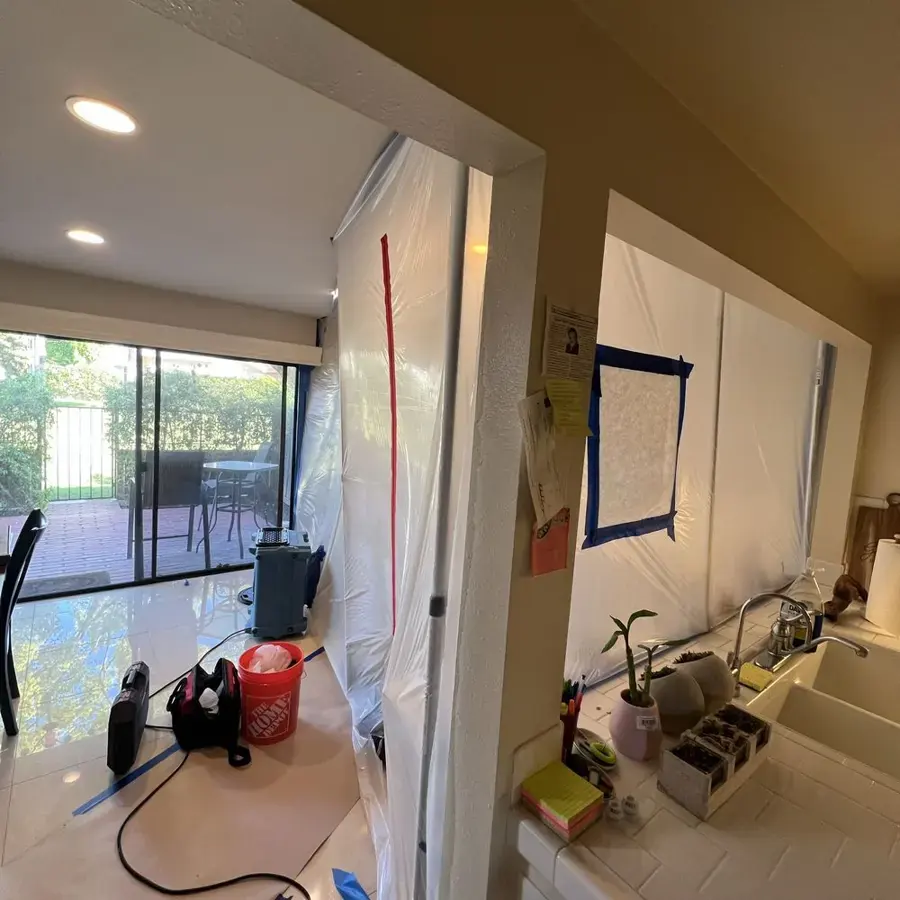
A surface that feels dry can still be wet inside, in the framing, the subfloor or the concrete. Structural drying is the process of measuring that hidden moisture and removing it until the readings agree.
First steps for structural drying and dehumidification in Brea
- 1
Get the water out
Remove standing water first so the equipment is not fighting puddles.
- 2
Leave equipment running
Do not switch dehumidifiers or fans off, since drying stops when they do.
- 3
Keep doors as set
Leave doors and windows as the crew arranged them so the drying area stays contained.
- 4
Trust the readings
Equipment goes only when the meters say dry, whatever the surface feels like.
What does structural drying and dehumidification cost in Brea, CA?
Structural drying in Brea typically costs $800 to $18,000, depending on how many rooms are wet, the materials involved, the equipment days needed and how fast drying began.
Ranges are typical, not a quote: category of water, square footage, material class and how fast drying started move the number most. Run the water damage cost calculator for a closer range.
How structural drying and dehumidification is handled in Brea
The tech who does the walkthrough maps moisture before any equipment goes down, so the drying plan matches what is actually wet. Equipment stays until the readings say dry, not until it looks dry.
- 1
Map and classify
Meters and thermal imaging set the class and extent of the loss.
- 2
Size the equipment
Air movers and dehumidifiers are matched to the moisture each room can release.
- 3
Read daily
Temperature, humidity and material readings are logged each day.
- 4
Verify dry
Equipment leaves only when materials read close to a dry reference.
What makes drying a Brea home different
Brea has 1,514 housing units from the 1950s, 2,825 from the 1960s and 2,535 from 2010 to 2019, so older plaster and wood framing and newer drywall are all common. Rain falls mostly from November through March, which is when many wet-season losses start.
- Plaster and older framing release water slowly
- Newer drywall wets fast and can often be dried in place when caught early
- Hardwood and engineered floors need controlled drying to avoid cupping
- Concrete holds moisture long after the surface looks dry
Setting up and finishing a dry-out
The crew maps wet materials with meters and thermal imaging, sizes air movers and LGR dehumidifiers to the room, and uses desiccant units where very low humidity is needed. Equipment placement is adjusted as readings change, and nothing leaves until the goal is met.
- Doors, windows and equipment stay as set while drying runs
- Daily psychrometric readings show whether drying is on track
- Containment keeps humid air from spreading to dry rooms
Why the drying log matters
The log shows temperature, humidity and moisture readings day by day, and it is what proves the structure reached the goal. Adjusters ask for it, and so do owners who want confidence before walls are closed up. See water extraction in Brea and commercial water damage in Brea.
Structural drying and dehumidification across Brea and nearby towns
Drying work covers ZIP 92821, 92822 and 92823, from Downtown Brea and Brea Boulevard to Country Hills, Blackstone, Olinda Ranch and Olinda Village, plus nearby homes.
The same service nearby: structural drying and dehumidification in La Habra, Fullerton, La Mirada.
Related water damage services in Brea
Structural Drying and Dehumidification questions in Brea, CA
What does structural drying actually involve?
It means removing moisture from framing, subfloors and other materials, not only the surface, using equipment and daily readings until a drying goal is reached.
How many days does it take?
A contained loss often takes three to five days. Concrete, hardwood and plaster can take longer.
What makes an LGR dehumidifier special?
LGR stands for low grain refrigerant. These units pull moisture from the air efficiently and keep working when the air is already fairly dry.
Why does the drying equipment make so much noise?
Air movers and dehumidifiers move a lot of air and heat. The noise is a sign the drying is working, and it ends when the equipment leaves.
Can I turn the equipment off overnight?
Please do not. Drying stops when the equipment stops, and the job takes longer.
How is dry actually proven?
Meters compare wet materials with a dry reference in the same house, and the daily log records each reading.
Wet structure in Brea? Get the drying started today.
A surface that feels dry can still hold water, so the framing and floors need equipment until the readings agree.
(888) 563-9619Brea drying team, any hour