Water Extraction in Brea, CA
Brea homes span 1950s tracts to hillside neighborhoods built much later, and standing water moves differently through each. The extraction crew removes it with a truck-mounted unit, then dries every material the water touched.
(888) 563-9619Get the Brea pump-out started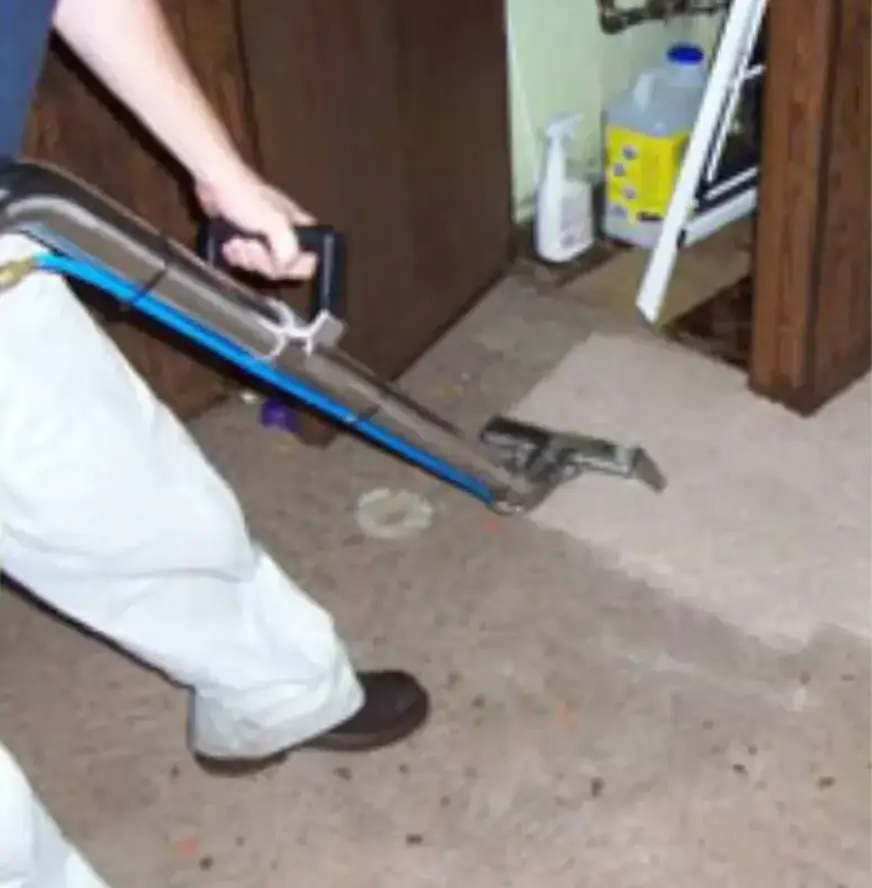
Pulling water out as liquid comes first, because each gallon removed that way is a gallon the dehumidifiers never have to pull from the air. The pump-out also has to suit very different houses, since Brea's median home was built in 1978.
First steps for water extraction and removal in Brea
- 1
Cut the supply
Close the main valve, or the shutoff at the failed fixture, so no more water reaches the floor.
- 2
Power down wet rooms
When the breaker box is in a dry spot, turn off circuits serving the flooded areas.
- 3
Document first
Wide shots and close-ups of standing water and soaked items, taken before anything shifts.
- 4
Elevate belongings
Move rugs, electronics and furniture off the soaked carpet, then call for extraction.
What does water extraction and removal cost in Brea, CA?
A Brea extraction job with drying afterward generally lands between $500 and $13,000. The water category, how many rooms are wet, the flooring and how fast the pump-out began move it up or down.
Ranges are typical, not a quote: category of water, square footage, material class and how fast drying started move the number most. Run the water damage cost calculator for a closer range.
How water extraction and removal is handled in Brea
The tech who does the walkthrough maps moisture before any equipment goes down, so the drying plan matches what is actually wet. Equipment stays until the readings say dry, not until it looks dry.
- 1
Walk and map
A meter and thermal camera reveal where water ran beneath baseboards, behind cabinets and into subfloors.
- 2
Extract
Standing water leaves through the truck mount, and weighted wands squeeze out carpet and pad.
- 3
Set equipment
Air movers and LGR dehumidifiers are placed according to how much moisture each room can release.
- 4
Check daily
Readings go in the log each day until wet materials match the dry reference.
Brea houses vary, so water travels differently
About 54 percent of Brea housing units were built before 1980, including 1,514 from the 1950s, 2,825 from the 1960s and 4,740 from the 1970s. Older tract houses and newer hillside communities hold flooring, pad and drywall in different ways, so the walkthrough tech reads each house before the wand touches the floor. Condos and townhomes add another layer, since water can drop through a floor into the space below.
- Pad under carpet is a sponge, so it gets slow weighted passes
- Click-together plank floors can hold water against whatever sits below them
- Wet organic materials can begin growing mold in one to two days
How the pump-out is run
The crew begins by scanning with meters and a thermal camera, so where the water went is known rather than guessed. A truck-mounted unit moves far more water than a portable one, and it sends that water outside the house rather than into a tank sitting in the hallway.
- Pooled water leaves first, followed by carpet and pad, then hard surfaces
- Gray or black water means the pad is cut out and surfaces get an EPA-registered cleaner
- Drying fans and dehumidifiers go in as soon as the wand is done
Drying and the claim file come next
Getting the water out stops the flooding but does not finish the job. Readings continue each day until wet materials come close to a dry sample, and the moisture map, logs and photos form the file the adjuster works from. The next phase is structural drying and dehumidification. For the whole picture start at water damage restoration in Brea, and if a split pipe is the cause, see burst pipe water damage in Brea.
Water extraction and removal across Brea and nearby towns
The Brea extraction crew covers ZIP 92821, 92822 and 92823, from Downtown Brea and Brea Boulevard to Olinda Village, Carbon Canyon and the streets around Brea Mall.
The same service nearby: water extraction and removal in La Habra, Fullerton, La Mirada.
Related water damage services in Brea
Water Extraction and Removal questions in Brea, CA
How fast does water need to come out?
Quickly. The longer water stays, the deeper it moves into drywall, pad and subfloor, and a simple pump-out becomes a tear-out. Organic materials that stay wet can start growing mold within a day or two.
Why not just use a shop vacuum?
A shop vacuum clears surface water but cannot draw out what pad and flooring layers hold. A truck-mounted unit with weighted wands removes far more, so the drying that follows is shorter.
Can wet carpet in a Brea home be saved?
Carpet that got clean water and is extracted promptly often dries where it lies. Pad generally comes out after gray or black water, and carpet touched by sewage is discarded.
Does a Brea condo need different handling?
Water in a unit can pass through floors and shared walls, so the crew maps the neighboring spaces too and shares the same moisture map and photos with the owner and building manager.
Why does equipment keep running after the pump-out?
Extraction takes out liquid only. Fans and dehumidifiers draw out the moisture still locked inside materials, and they run until readings show the structure is dry.
Will my insurance pay for extraction?
Sudden water from something like a failed supply pipe is often covered, while rising storm water usually calls for flood coverage. Coverage depends on your policy, so check with your own insurer.
Floor wet in Brea? Get the water out today.
Every hour of delay lets water climb into drywall and soak pad and subfloor, so quick extraction means fewer materials to replace.
(888) 563-9619Brea extraction, any hour