Structural Drying and Dehumidification in La Habra, CA
Drying the structure, not just the surface, is what keeps a La Habra water loss from coming back as swollen flooring or a musty wall. The drying team sizes the equipment, logs readings daily and stops at the goal.
(888) 563-9619Dry the structure the right way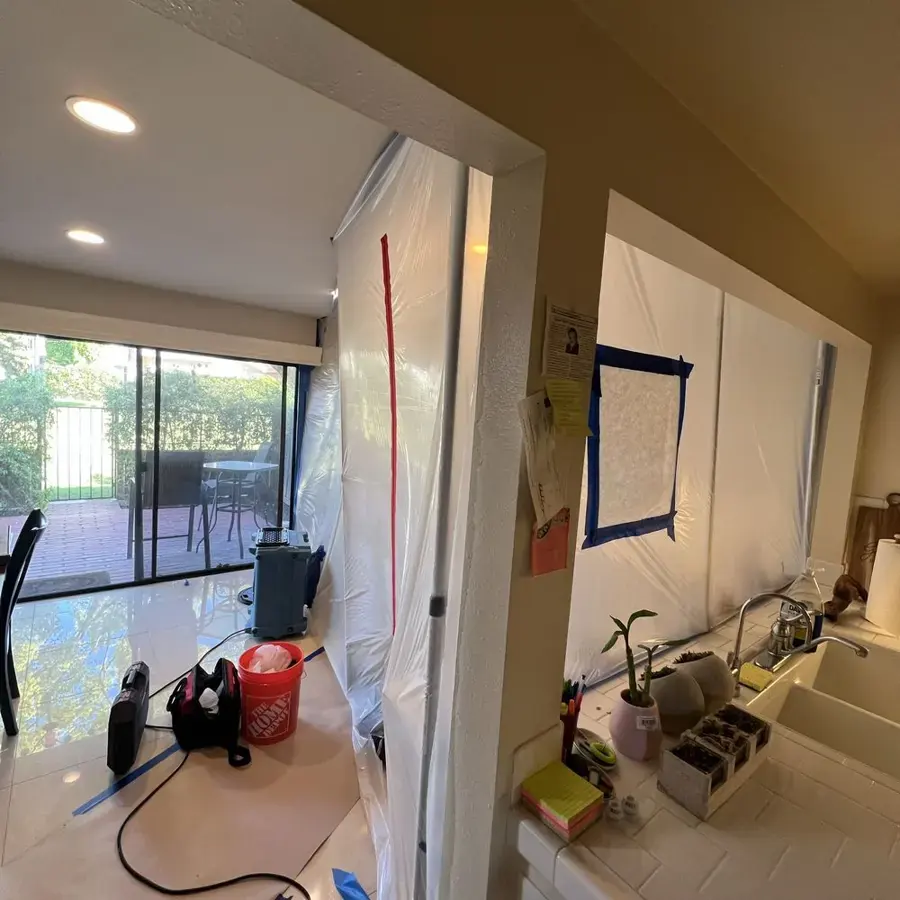
Structural drying is the part of a water loss that takes the longest and matters the most. Carpet can feel dry in a day while the slab, the bottom plate and the drywall behind it still hold water.
First steps for structural drying and dehumidification in La Habra
- 1
Remove standing water
Drying cannot start until standing water is extracted.
- 2
Leave equipment running
Do not switch off air movers or dehumidifiers between readings.
- 3
Keep doors and windows as set
The drying team sets the room up as a closed or open system on purpose.
- 4
Let readings decide
Equipment comes out when readings say dry, not when it looks dry.
What does structural drying and dehumidification cost in La Habra, CA?
In La Habra, CA, structural drying typically runs $800 to $18,000, depending on the class of loss, the number of rooms, dense materials like slab or hardwood and how fast drying started.
Ranges are typical, not a quote: category of water, square footage, material class and how fast drying started move the number most. Run the La Habra water damage cost calculator for a closer range.
How structural drying and dehumidification is handled in La Habra
The tech who does the walkthrough maps moisture before any equipment goes down, so the drying plan matches what is actually wet. Equipment stays until the readings say dry, not until it looks dry.
- 1
Moisture map and class
The wet area is mapped and the class of loss is set.
- 2
Equipment sized
Air movers and dehumidifiers are matched to each room's load.
- 3
Daily readings
Material and psychrometric readings are logged every day.
- 4
Dry verification
Equipment comes out when materials match the dry reference.
What makes drying a La Habra home different
Most La Habra homes sit on concrete slabs, which absorb water and release it slowly. Inland summers are warm and often dry, which helps evaporation, while cool, damp winter weeks slow it down. The drying plan accounts for both the material and the air.
- Concrete slabs that need drying mats or desiccants
- Engineered wood and laminate that trap water against the slab
- Plaster and lath in some of the oldest houses
- Wall cavities with wet insulation behind the drywall
How the drying team sets up and finishes
The tech who does the walkthrough maps moisture and sets the class of loss, which decides how many air movers and dehumidifiers a room needs. LGR dehumidifiers pull water out of the air, desiccants handle dense materials, and air movers keep wet surfaces evaporating. Every day the team records material readings and psychrometric data.
- Class 1 through 4 sets the equipment count
- Readings compared against a dry reference in the same house
- Equipment removed only when the goal is reached
Why the drying log matters
The daily log is the proof that the structure is dry and the record an adjuster reviews. The EPA explains why fast drying limits mold growth, and the DOE Energy Saver pages cover how moisture moves through a house. See water extraction for the first step and slab leak water damage for wet concrete.
Structural drying and dehumidification across La Habra and north Orange County
The La Habra restoration crew covers ZIP 90631, from Downtown La Habra and La Habra Boulevard out along Imperial Highway, Whittier Boulevard and Harbor Boulevard to the Westridge hillside.
Nearby coverage reaches La Habra Heights, Fullerton, Brea, Whittier, La Mirada, Buena Park.
Related water damage services in La Habra
Structural Drying and Dehumidification questions in La Habra, CA
What does structural drying mean?
Drying the building materials themselves, the slab, framing, subfloor and wall cavities, not just the visible surfaces, until readings match a dry reference.
How long does structural drying take?
A contained Class 1 loss usually dries in three to five days. Concrete slabs, hardwood and plaster take longer.
What is an LGR dehumidifier?
A low grain refrigerant dehumidifier pulls more water out of the air than a standard unit, which keeps drying moving as the air gets drier.
Why is the equipment so loud?
Air movers push large volumes of air across wet surfaces to keep evaporation going. Leave them running; switching them off stalls the drying.
Can I turn the equipment off at night?
It is better not to. Drying works around the clock, and stopping it lets moisture settle back into materials.
How do I know the house is really dry?
The daily log shows readings falling to within 2 to 4 points of a dry reference material in an unaffected part of the house.
Wet slab or walls in La Habra? Get the drying started today.
Surface-dry is not dry; the slab and framing need equipment until the readings say so.
(888) 563-9619La Habra drying team, any hour