Structural Drying and Dehumidification in La Mirada, CA
La Mirada's median home dates to 1960, and about 12,300 of its homes are detached houses, so drying often reaches older walls, floors and ceilings. Crews match equipment to each room, record readings every day and finish only when the goal is reached.
(888) 563-9619Dry it to a measured finish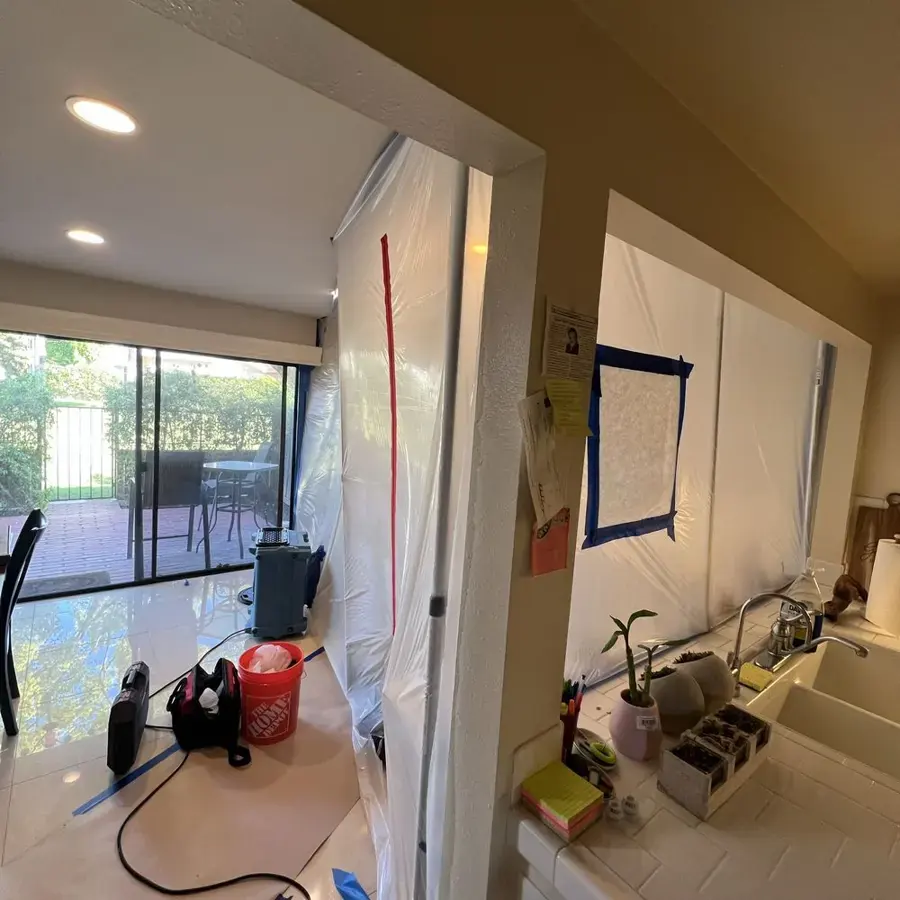
Of all the stages in a water loss, drying the building itself takes longest and counts most. Surfaces may feel dry within a day while framing, subfloor and wall layers still hold water.
First steps for structural drying and dehumidification in La Mirada
- 1
Extract first
Drying equipment works best once standing water has been removed.
- 2
Leave the gear running
Switching off fans or dehumidifiers between visits lets moisture creep back.
- 3
Leave the setup alone
Doors, windows and plastic sheeting are arranged on purpose, so keep them as set.
- 4
Trust the readings
Equipment leaves when the numbers say dry, however the surface looks.
What does structural drying and dehumidification cost in La Mirada, CA?
Structural drying generally costs $800 to $18,000 in La Mirada, CA. Loss class, room count, dense materials like concrete or hardwood and how fast work started drive the total.
Ranges are typical, not a quote: category of water, square footage, material class and how fast drying started move the number most. Run the water damage cost calculator for a closer range.
How structural drying and dehumidification is handled in La Mirada
The tech who does the walkthrough maps moisture before any equipment goes down, so the drying plan matches what is actually wet. Equipment stays until the readings say dry, not until it looks dry.
- 1
Classify the loss
Mapping sets the class of loss and the equipment each room needs.
- 2
Place the gear
Air movers and dehumidifiers are positioned for each room's moisture load.
- 3
Record the numbers
Material and air readings go into the log every day.
- 4
Sign off dry
Equipment is removed once materials match the dry reference.
Drying older La Mirada construction
The median La Mirada home was built in 1960, and about 12,300 of the city's units are detached houses. Walls, floors and ceilings from that era hold moisture in several layers, so the drying plan considers each material and the air around it, not just the wet spot.
- Flooring that holds water against the surface below
- Wall layers with soaked insulation hidden behind drywall
- Ceiling assemblies above a leak
- Cabinet bases and wall bases that trap moisture
How the setup and finish work
The walkthrough tech maps moisture and assigns the class of loss, which determines the equipment each room requires. LGR dehumidifiers remove moisture from the air, desiccant units suit dense materials and fans keep wet surfaces releasing water. Material and air readings are logged daily.
- The class of loss sets the equipment count
- Readings are measured against a dry spot elsewhere in the building
- Equipment leaves only once the goal is met
What the drying log proves
The daily record shows the structure reached dry and gives an adjuster something to check. Fast, verified drying also limits secondary damage. Start with water extraction in La Mirada for the first step, or see slab leak water damage in La Mirada for wet concrete.
Structural drying and dehumidification across La Mirada and nearby towns
The La Mirada drying team covers ZIP 90638, from Granada Heights and Creek Park to Foster Park and the La Mirada Boulevard and Valley View Avenue corridors.
The same service nearby: structural drying and dehumidification in La Habra, Buena Park, Whittier.
Related water damage services in La Mirada
Structural Drying and Dehumidification questions in La Mirada, CA
Why dry the structure instead of just the surface?
Framing, subfloors and the layers behind drywall hold water long after the surface feels dry. Leaving it there invites swelling, odors and further damage.
What does an LGR dehumidifier do?
It is a low grain refrigerant unit that keeps removing water from the air even as the air gets drier, which keeps the drying moving.
Why are the fans so noisy?
Powerful airflow across wet surfaces keeps evaporation going, and shutting them off stops that.
Is it okay to unplug the equipment overnight?
Better not. Drying is a continuous process, and a pause lets moisture move back into materials.
How is the finish confirmed?
Daily readings show moisture content approaching a dry reference taken from an unaffected part of the same home.
How long will it take?
That depends on the class of loss and the materials. Concrete, hardwood and plaster take longer than carpet, and the readings decide.
Wet floors or walls in La Mirada? Begin drying today.
A surface that feels dry is not dry, so framing and flooring need equipment until the readings agree.
(888) 563-9619La Mirada drying team, any hour