Structural Drying and Dehumidification in Whittier, CA
Plaster, wood framing and brick all dry at different speeds, and Whittier has plenty of each. A drying crew picks equipment room by room, logs readings daily and pulls it out only when the structure reaches the goal.
(888) 563-9619Dry the building thoroughly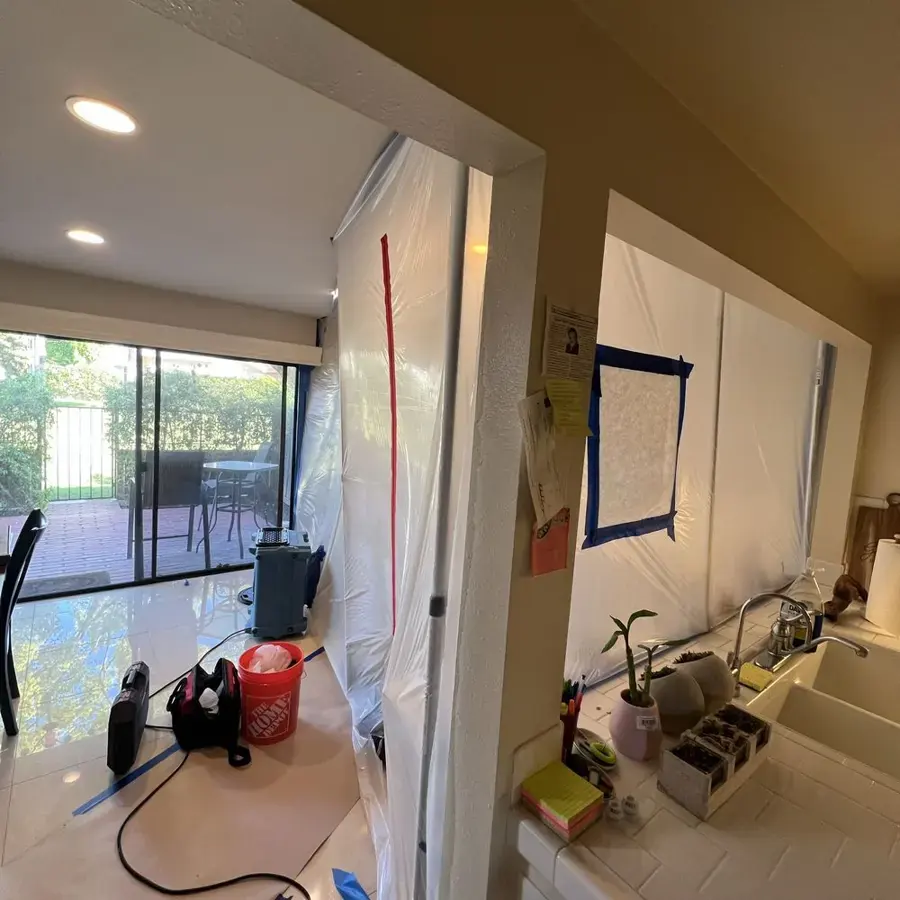
Drying the structure takes longest and matters most. A carpet may feel dry after a day, yet plaster, the bottom plate and the drywall behind it can still be soaked, and that water later returns as swelling or odor.
First steps for structural drying and dehumidification in Whittier
- 1
Get the standing water out
Drying cannot begin while water is still sitting on the floor.
- 2
Leave the gear on
Keep fans and dehumidifiers running between visits.
- 3
Respect the room setup
The crew closes or opens each room on purpose, so leave doors and windows as set.
- 4
Trust the numbers
Equipment leaves when readings say dry, not when the room looks dry.
What does structural drying and dehumidification cost in Whittier, CA?
Structural drying in Whittier, CA typically costs $800 to $18,000, driven by the class of loss, how many rooms are wet, whether dense materials such as concrete, hardwood or plaster are involved and how soon drying began.
Ranges are typical, not a quote: category of water, square footage, material class and how fast drying started move the number most. Run the water damage cost calculator for a closer range.
How structural drying and dehumidification is handled in Whittier
The tech who does the walkthrough maps moisture before any equipment goes down, so the drying plan matches what is actually wet. Equipment stays until the readings say dry, not until it looks dry.
- 1
Map and classify
The wet area is charted and the class of loss is set.
- 2
Size the gear
Air movers and dehumidifiers are matched to the load in each room.
- 3
Read every day
Material and air readings are logged each visit.
- 4
Verify and remove
Equipment leaves after materials match the dry sample.
Why Whittier buildings need a custom drying plan
The 1940s and 1950s homes at the center of Whittier mix plaster, wood framing and brick, and the Uptown masonry buildings add more variety. Each material gives up water on its own schedule, so one timetable fits none of them.
- Plaster walls take water in quickly and let go slowly
- Framing and subfloors must reach a dry number, not just feel dry
- Brick and masonry in the older Uptown buildings
- Insulation hiding wet in wall cavities
How the drying team plans, runs and finishes a job
The tech maps moisture and assigns a class of loss, which sets the number of fans and dehumidifiers a room gets. LGR units pull moisture out of the air, desiccants work on dense materials, and fans keep wet surfaces giving up water. Both material and air readings go into the log daily.
- The class of loss, 1 through 4, drives how much equipment goes in
- Each reading is compared with a dry sample from the same building
- Gear comes out only when the target is reached
The log is the proof
The daily log shows the structure is dry and is the first thing an adjuster looks at. The first stage is covered under water extraction in Whittier, and wet concrete under leaks beneath a concrete floor.
Structural drying and dehumidification across Whittier and nearby towns
The Whittier drying crew covers ZIP 90601 to 90610, from Uptown Whittier and Central Park to Hadley-Greenleaf, College Hills, East Whittier and the Whittier Boulevard corridor.
The same service nearby: structural drying and dehumidification in La Habra, La Mirada, Buena Park.
Related water damage services in Whittier
Structural Drying and Dehumidification questions in Whittier, CA
What does drying the structure involve?
Drying the structure means drying the building's own materials, framing, subfloor, plaster and wall cavities, not only the surfaces, until readings match a dry sample.
How long should it take?
A light, contained loss finishes sooner than one involving concrete, hardwood or plaster. The daily readings, not the calendar, decide when it is done.
What does LGR stand for?
It stands for low grain refrigerant, a design that removes more moisture than an ordinary dehumidifier even when the air is already fairly dry.
Why is the equipment so loud?
The fans have to move a lot of air to keep water leaving wet surfaces. Turning them off halts the progress, which is why they run.
Is it fine to turn it off at night?
It is better to leave it on. Drying works around the clock, and a pause lets moisture creep back into materials.
How is dry proven?
Look at the log: the readings drop to within 2 to 4 points of a sample from a part of the building the water never reached.
Wet floors or walls in Whittier? Start drying today.
Surface-dry is not dry, so framing and floors keep the equipment running until the readings agree.
(888) 563-9619Whittier drying team, any hour