Water Extraction in Whittier, CA
Whittier's median home went up in 1955, and about 89 percent predate 1980, so older floors and walls drink in flood water quickly. The extraction crew removes it with truck-mounted gear, then dries the building to a measured number.
(888) 563-9619Clear the water from the Whittier floor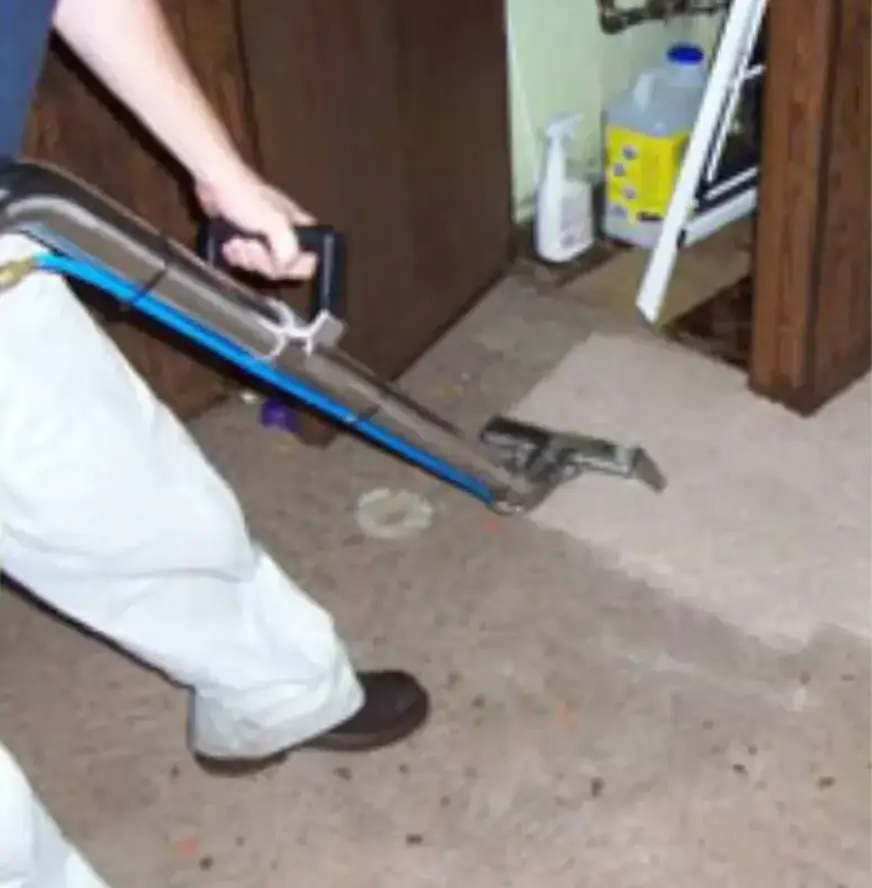
Removing the water comes before everything else in a dry-out, and it pays for itself. Every gallon that leaves as liquid is one less gallon the dehumidifiers must pull out of the air, so quick, complete removal trims the entire job in a Whittier building.
First steps for water extraction and removal in Whittier
- 1
Turn the water off
Close the house valve or the one at the fixture, so the floor stops getting wetter.
- 2
Mind the electrics
Flip breakers for soaked rooms only if the panel is in a dry spot, and keep out of water near outlets.
- 3
Photograph it all
Shoot the whole room and then the details of every damaged item before anything is shifted.
- 4
Raise valuables
Get rugs, devices and furniture legs up off the wet floor, then call for extraction.
What does water extraction and removal cost in Whittier, CA?
In Whittier, CA, water extraction plus the drying that follows typically runs $500 to $13,000, depending on the water category, the count of wet rooms, the flooring and walls involved and how soon pumping begins.
Ranges are typical, not a quote: category of water, square footage, material class and how fast drying started move the number most. Run the water damage cost calculator for a closer range.
How water extraction and removal is handled in Whittier
The tech who does the walkthrough maps moisture before any equipment goes down, so the drying plan matches what is actually wet. Equipment stays until the readings say dry, not until it looks dry.
- 1
Walkthrough and mapping
A meter and a thermal camera follow the water beneath baseboards, behind cabinets and into plaster.
- 2
Truck-mounted pump-out
Puddles leave first, then hand tools squeeze water from carpet and pad.
- 3
Drying gear placed
Fans and LGR dehumidifiers are placed to suit how fast each room can evaporate.
- 4
Readings until dry
Numbers are written down daily until materials match a dry sample.
Why flood water travels in older Whittier buildings
The 1950s is Whittier's biggest build decade, with the 1940s next, and the housing runs from wood-frame tract houses to the Craftsman homes of Hadley-Greenleaf. A spill rarely stays put: it slides beneath baseboards, climbs into plaster and drywall, and hides under flooring that looks perfectly dry.
- Carpet pad acts like a sponge and gives up its water only to weighted tools, not a household vacuum
- Laminate and engineered boards trap a film of water against the subfloor
- Older plaster walls take water up slowly and let it go even more slowly
What the extraction crew does on the floor
A tech walks the property first with a moisture meter and a thermal camera, which shows where water went as well as where it pooled. The truck-mounted unit then moves far more water than a portable pump could, and it discharges outdoors instead of filling a tank beside the work.
- Puddles go first, then soaked carpet and pad, then hard floors
- Gray or black water means pad is cut out and surfaces are treated with an EPA-registered antimicrobial
- Fans and LGR dehumidifiers go in directly after the wands, sized to each room
Once the pump-out ends: drying and the claim record
Pulling the water out stops the flood but does not finish the work. Each day's readings, the moisture map and dated photos form the folder an adjuster looks over, and the equipment stays until wet materials land within 2 to 4 points of a dry reference. The next stage is covered under structural drying in Whittier, and water that rises from under the floor is covered under leaks beneath a concrete floor. Every service is listed on the Whittier water damage hub.
Water extraction and removal across Whittier and nearby towns
The Whittier extraction crew covers ZIP 90601 to 90610, from Uptown Whittier and Central Park to College Hills, East Whittier and the Whittier Boulevard corridor.
The same service nearby: water extraction and removal in La Habra, La Mirada, Buena Park.
Related water damage services in Whittier
Water Extraction and Removal questions in Whittier, CA
How soon should water come out of a Whittier home?
Right away if possible. Each passing hour lets more water climb drywall and soak pad and flooring, so a quick job can grow into a demolition job. Mold can also begin growing on wet materials.
Will a household vacuum do the job?
It lifts surface water only. Water soaked into pad or trapped beneath laminate needs a truck-mounted unit and weighted tools, and every extra gallon removed early shortens the drying.
Does the carpet have to go?
Carpet hit by clean water and cleared fast often dries in place. Gray or black water usually sends the pad out, and sewage means the carpet goes too.
Do older plaster walls need special care?
Plaster holds water longer than drywall and dries slowly, so the crew meters it before deciding what to open. Many Whittier homes date to the 1940s and 1950s, so plaster turns up often.
Why does equipment keep running after the pump-out?
Pumping takes out liquid only. Fans and dehumidifiers draw out the moisture still locked in boards and plaster, and they stay put until readings show the structure is dry.
Does insurance pay for extraction?
Many policies cover a sudden break like a failed supply pipe, while water rising from outdoors usually needs separate flood coverage. Coverage depends on your policy, so check with your own insurer.
Flooded floor in Whittier? Start the removal now.
The longer water lingers, the more drywall, pad and flooring ends up in the dumpster, so removal always comes first.
(888) 563-9619Whittier pump-out, any hour