Structural Drying and Dehumidification in Fullerton, CA
Fullerton homes from the 1920s to the 1970s mix plaster, wood framing and later drywall, and each dries at its own pace. The team picks equipment to match each room, records readings every day and stops only when every material reaches the goal.
(888) 563-9619Dry the whole structure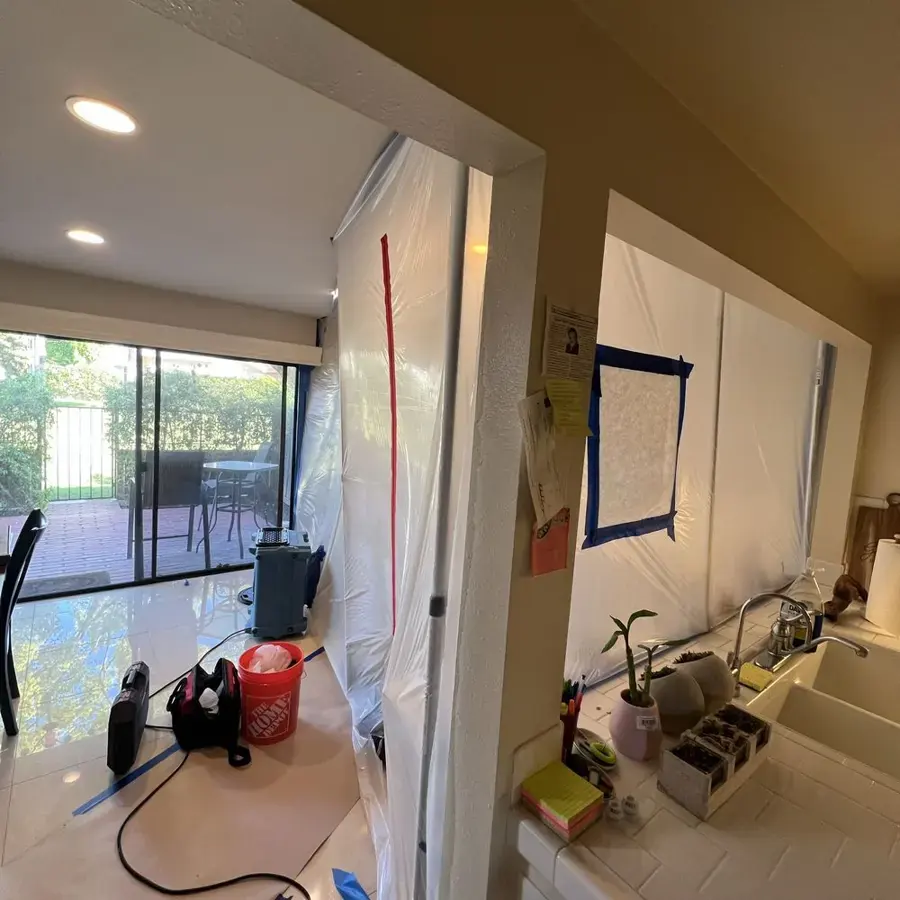
Surfaces dry first and fool people. A floor can feel dry within a day while the framing beneath it, the bottom of the wall and the drywall behind still hold water, and only the drying plan and the readings show what is left.
First steps for structural drying and dehumidification in Fullerton
- 1
Remove standing water first
Drying can't start while any water is still pooled on the floor.
- 2
Keep the machines running
Leave air movers and dehumidifiers on between visits.
- 3
Leave doors and windows alone
The crew sets each room open or closed on purpose, so keep it that way.
- 4
Let readings decide
Equipment goes when the numbers say dry, not when the surface feels dry.
What does structural drying and dehumidification cost in Fullerton, CA?
Structural drying in Fullerton costs $800 to $18,000. The class of loss, the number of wet rooms, dense materials such as hardwood or plaster and the speed of the response decide where a job falls.
Ranges are typical, not a quote: category of water, square footage, material class and how fast drying started move the number most. Run the water damage cost calculator for a closer range.
How structural drying and dehumidification is handled in Fullerton
The tech who does the walkthrough maps moisture before any equipment goes down, so the drying plan matches what is actually wet. Equipment stays until the readings say dry, not until it looks dry.
- 1
Map and classify
Meters trace the wet area and the loss gets its class.
- 2
Size the equipment
Each room gets air movers and dehumidifiers matched to its load.
- 3
Log every day
Material and air readings are written down daily.
- 4
Confirm dry
Equipment leaves once every material matches the dry reference.
What makes drying a Fullerton house different
Fullerton's wet months are December through March, with February at 3.02 inches, and almost no rain falls from June through August. Homes built between the 1920s and the 1970s combine plaster, wood framing and later drywall, and each material releases water at a different pace. The plan has to account for the materials and for the air that day.
- Older plaster that dries slowly and unevenly
- Wood framing that holds water deep inside
- Drywall that wicks water up from the base of a wall
- Floating floors that hold water against the surface below
How the drying team sets up and finishes
At the start, the loss is given a class, and the class tells the crew how many air movers and dehumidifiers each room should get. LGR units draw moisture from the air, desiccants take on dense materials and air movers keep wet surfaces releasing water. Every day, readings from the materials and the air go into the log.
- The class, from 1 to 4, sets the equipment count
- Readings measured against a dry area of the same house
- Equipment removed only once the goal is reached
Why the daily log matters
The log proves the structure is dry, and it is what an adjuster reads. In a Fullerton home with plaster walls or a lot of framing, it also shows which parts took longer. For the first step, see water extraction in Fullerton, and for a leak under the floor, read about leaks under the floor.
Structural drying and dehumidification across Fullerton and nearby towns
The Fullerton drying crew covers ZIP 92831 to 92838, from Downtown Fullerton and the Hillcrest Park area to Golden Hills, Raymond Hills, Amerige Heights and Orangethorpe Avenue.
The same service nearby: structural drying and dehumidification in La Habra, Brea, La Mirada.
Related water damage services in Fullerton
Structural Drying and Dehumidification questions in Fullerton, CA
What does structural drying mean?
It means drying the building itself, meaning the framing, subfloor and wall cavities as well as the visible surfaces, until readings agree with a dry reference.
How long does it take?
The readings decide. A small, contained loss dries sooner, while plaster, hardwood and thick framing take longer.
What is an LGR dehumidifier?
LGR stands for low grain refrigerant. These units remove more moisture from the air than a basic dehumidifier, which keeps drying moving even when the air is already dry.
Why is the equipment noisy?
Air movers blast a lot of air across wet surfaces so water keeps evaporating. Leave them running, because switching them off slows the job.
May I switch it off overnight?
It is better to leave it on. Drying works around the clock, and a pause lets moisture creep back into the materials.
How do I know the house is really dry?
The daily log shows each material's readings falling until they match a sample from a dry part of the same house.
Soaked walls or floors in Fullerton? Begin the drying.
A dry-feeling surface does not mean a dry house, so floors and framing keep their equipment until the numbers agree.
(888) 563-9619Fullerton drying team, any hour