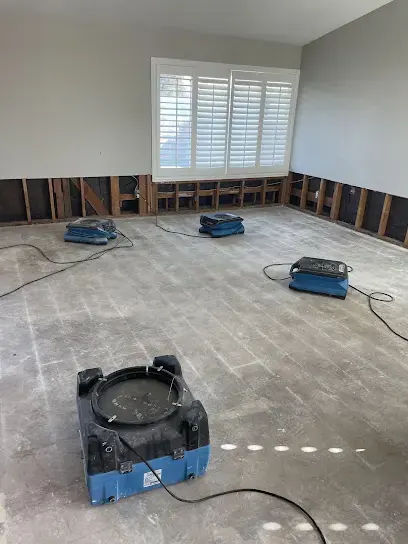
Uptown Whittier, around Philadelphia Street and Greenleaf Avenue, is the traditional central business core of the city. Many of its buildings are older masonry, and the area took the worst of the October 1, 1987 earthquake damage, so owners know how hard a building can be hit.
Key takeaways
- A water loss in a shop or restaurant has two clocks running: the damage to the building and the days the business cannot open.
- The first job is to stop the water, protect inventory and photograph everything before anything is moved.
- Older brick, plaster and wood framing hold moisture and dry more slowly than new drywall, so readings matter more than appearance.
- Tenants and landlords usually share the response, so a call to the property owner belongs on day one.
- Whether the loss is covered depends on the policy, and business interruption coverage is worth asking about early.
Why Uptown buildings need a different plan
Uptown is the older heart of the city, with masonry storefronts, plaster interiors and wood framing that have been repaired and rebuilt over the decades. Across Whittier, 4,144 housing units date to 1939 or earlier, so age is part of the local picture.
The Whittier Narrows earthquake struck on October 1, 1987 with a magnitude of 5.9. The worst damage to unreinforced masonry buildings was in the Uptown business district, and The Quad at Whittier shopping mall was destroyed and later rebuilt.
- Brick and plaster soak up water and release it slowly.
- Old wood floors cup and buckle if drying is rushed or uneven.
- Shared walls mean one tenant's leak can become the neighbor's problem.
Day one for a business owner
The first day is for control. A business owner does not have to solve everything, only the right few things in the right order.
Stop the water and make the space safe
Shut off the water at the nearest valve or at the building main. If water is near outlets, display lighting or kitchen equipment, turn off power to that area only if the breaker can be reached safely.
Protect what can be moved
Move inventory, paper records and electronics out of the wet zone and up onto shelves or tables. Take photos first, so the original position is on record.
- Lift stock off the floor onto plastic or foil.
- Cover display cases and equipment that cannot be moved.
- Keep staff and customers out of slippery areas.
Call the right people
Tell the property owner or manager, the insurer and the restoration team. Water in a shared building can reach more than one unit.
Water, power and gas safety in a commercial space
A business has more systems than a home: display lighting, point of sale equipment, kitchen gear and sometimes gas appliances. Each one adds a hazard when water is on the floor.
The safest rule is to leave anything that is wet or near water alone until a qualified person says it is safe.
- Do not touch outlets, cords or equipment standing in water.
- Turn off power to a wet area only when the panel can be reached safely.
- Shut off gas appliances only if it is safe, and leave the building if a gas smell is present.
- Keep customers and staff out of wet or slippery spaces.
Where the water comes from in an older business district
Not every loss starts in the building. A December 2012 water main break left the Radisson Hotel on Greenleaf Street without water for about 3 1/2 hours, which shows how a supply problem in the street can reach a business.
- Supply pipe splits, failed valves and old fittings inside walls.
- Restroom fixtures that overflow after hours.
- Roof drains and flashing that leak in winter rain.
- Kitchen equipment such as dishwashers, ice machines and grease traps.
How the commercial response works
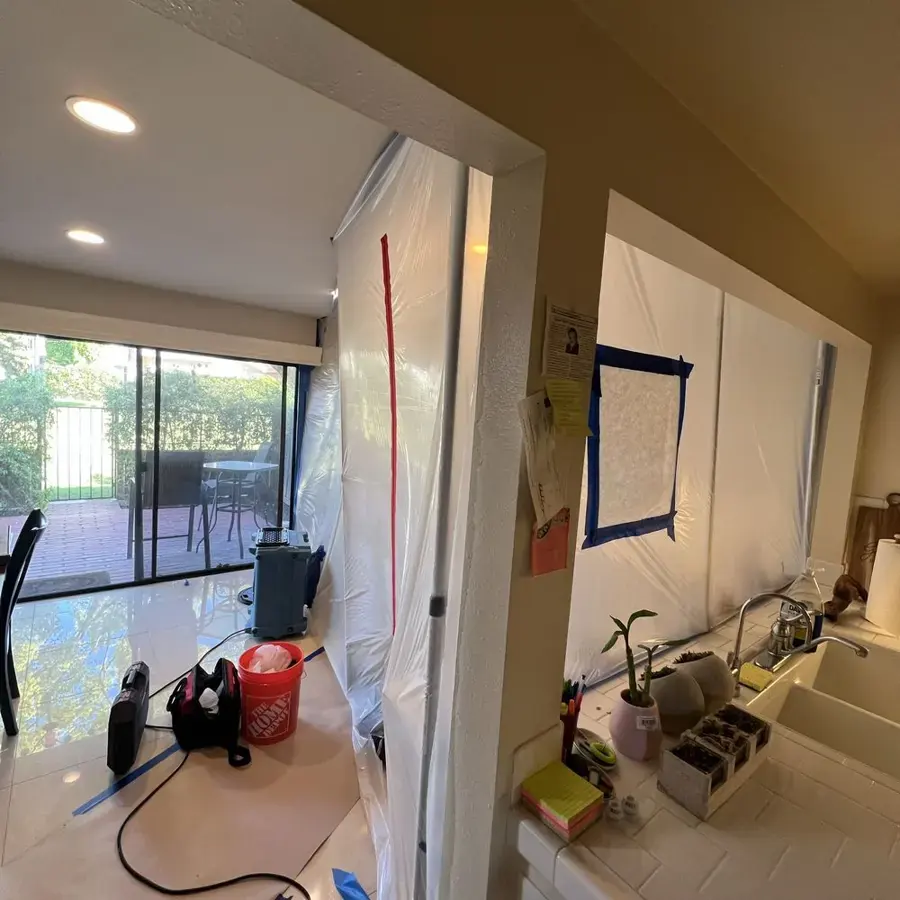
The commercial water damage service in Whittier is built around keeping the business moving where that is possible. The team works in phases so one area can reopen while another is still being dried.
Extraction and containment
Standing water comes out first with extraction equipment. Plastic barriers and air scrubbers keep dust and moisture out of dry areas.
Drying masonry and old framing
The plan for the structural drying service in Whittier accounts for brick, plaster and wood, which do not behave the same way. Readings are taken repeatedly and equipment stays until the walls and floors are back to a dry standard.
Restaurants and retail: different losses, different priorities
A restaurant and a clothing shop can sit on the same block and need very different responses. The first is about food safety and equipment, the second about stock and fixtures.
- Restaurants: kitchen equipment, floor drains, dishwashers and ice machines are the likely sources, and any food touched by water has to be discarded.
- Retail: stock on low shelves, display fixtures and carpet or wood floors take the damage.
- Offices: computers, files and the wall bases around bathrooms and break rooms.
Records, tenants and the landlord
In a leased space, the lease decides who handles the building and who handles contents. Both parties should read it before work is scheduled.
Good records shorten claims. A business should keep a plain file with the same items every time.
- Dated photos and video of the loss, before and after cleanup.
- A list of damaged inventory with quantities and receipts where possible.
- Drying readings and the equipment log from the restoration team.
- Records of the days the business could not open, for a business interruption claim.
Reopening in phases
A business wants to reopen as soon as it is safe. The work plan is built around that goal, one area at a time.
Customers should never walk past wet floors or open walls, so the plan includes barriers and clear signs.
- Dry areas reopen first, behind plastic barriers where needed.
- Drying equipment is placed where it blocks the least traffic.
- Final readings confirm the floors and walls are dry before finish work starts.
Insurance questions to ask early
A commercial policy may separate the building, the contents and lost income. Whether a loss is covered depends on the policy, so ask the insurer which parts apply.
The broader commercial water damage page for La Habra lists the documents that usually travel with a business claim.
Questions
What is the first thing a Whittier business owner should do?
Stop the water at the nearest valve, then move inventory and records out of the wet area. Photograph everything before it moves.
Why do older brick buildings take longer to dry?
Brick, plaster and old wood framing hold moisture and release it slowly. Drying is checked with readings, not by how dry a surface looks.
Can the shop stay open during cleanup?
Sometimes part of it can. The work is phased and contained so dry areas can keep operating where it is safe.
Who handles the loss in a leased space?
The lease decides. Tell the landlord or property manager on day one and read the lease for building and contents responsibilities.
What if the water came from a street main break?
Report it to the water provider and document the damage. The City of Whittier and Suburban Water Systems serve different parts of the city, depending on the address.
Do older masonry buildings need special equipment?
The equipment is the same air movers and dehumidifiers, but they run longer and readings are taken more often because brick and plaster release water slowly.