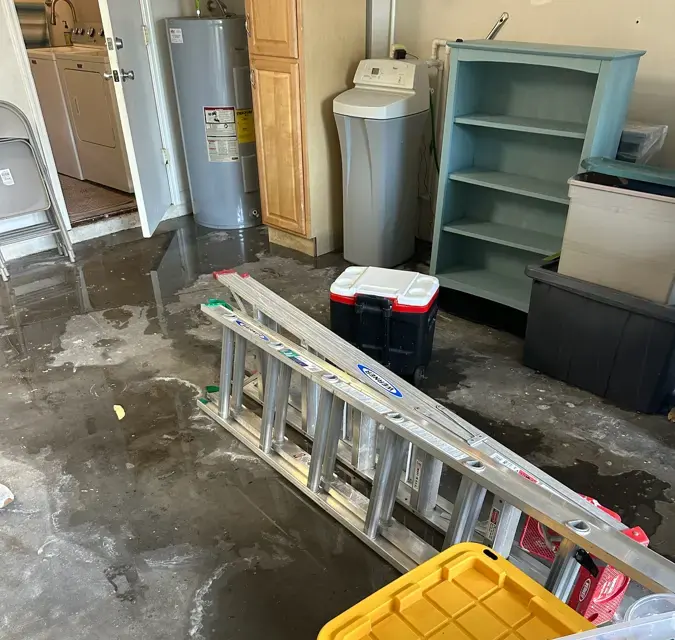
Brea sits at the foot of the Puente Hills, and in a heavy rain the water that runs down from higher ground does not always stay in the street. The City reports minor street flooding and residential mud runoff, and Carbon Canyon Road has been closed and damaged more than once.
Key takeaways
- The City of Brea reports street flooding, residential mud runoff and repeated closures and damage along Carbon Canyon Road, which is State Highway 142.
- Brea Public Works offers up to 10 sandbags per address during heavy rain, at the City Yard on North Berry Street, with proof of residency.
- Runoff that carries mud into a house is treated as contaminated storm water, not as clean rain water.
- Photograph the mud mark, move belongings to higher shelves and keep the household off wet floors until the water is out.
- Rain in Brea concentrates between November and March, so the preparation window is the weeks before the first big storm.
What the City says about runoff and Carbon Canyon Road
Carbon Canyon Road is State Highway 142, and it is the road that reaches Olinda Village and Chino Hills. The City of Brea reports that it is prone to mudslides and loose rocks in heavy rain.
On December 27, 2025, the Brea Police Department reported Carbon Canyon closed in both directions because of falling rocks during a storm.
- Minor flooding on city streets is part of the City's own report.
- Residential mud runoff is listed as a storm effect, which means mud can reach driveways and garages.
- Repeated closures and significant damage along Carbon Canyon Road are part of the same report.
Getting ready before the first storm
Brea has a hot summer Mediterranean climate, with rain concentrated from November through March. The first storm of the season often arrives after months of dry ground, which sends water and loose soil downhill quickly.
A short checklist at the end of fall gives a house the best chance to stay dry.
Sandbags and drainage
Brea Public Works offers up to 10 sandbags per address during heavy rain events. Pickup is at the City Yard on North Berry Street, and proof of residency is required.
- Place bags at garage doors, side gates and low door thresholds where water has entered before.
- Clear leaves and debris from gutters, downspouts and the nearest street inlet.
- Point downspouts away from the house so roof water does not join the runoff.
Inside the house
Water that gets past the bags is a lot easier to handle when belongings are off the floor.
- Move stored boxes and electronics off garage and closet floors.
- Know where the main water and electrical shutoffs are.
- Keep photos of each room as it looks dry, because they make before and after comparison simple.
Roofs, slopes and gutters: the City's own advice
The City urges residents to fix roofs, slopes and gutters before storms. That advice makes sense in a town where rain falls in a short season and the first storm lands on dry ground.
A roof that sheds water to the wrong side or a gutter packed with leaves can send water into a wall instead of away from the house.
- Walk the roof edge and the gutters from the ground and look for sagging sections or gaps.
- Check that the soil near the house slopes away from the walls and not toward them.
- Look at slope drains and swales on the lot for loose soil or blockage.
- Clear the garage door track and threshold of debris so a sandbag or door seal can sit flat.
Why muddy runoff is a bigger job than a plumbing leak
Storm runoff picks up soil, oil, pesticides and whatever else lies on the ground. When it enters a house, it is classified as Category 3, the most contaminated water category.
That is why the response is different from a washing machine leak. The Brea page on storm and flood cleanup describes the contaminated water approach.
- Carpet, pad and wet drywall that touched runoff are usually removed instead of dried.
- Hard floors are cleaned, treated and dried in place.
- Mud is shoveled and vacuumed out before the final extraction pass.
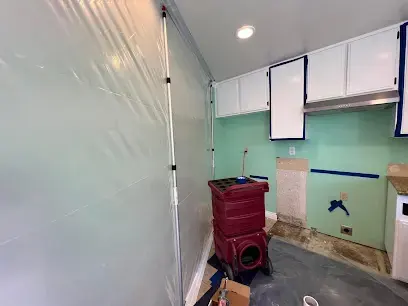
What to do when mud and water get inside
The first steps are about safety. Wet floors and electrical outlets do not mix, and runoff can hide hazards underneath it.
- Turn off power to the affected rooms at the panel if the water is near outlets and it can be done safely.
- Photograph the mud mark on the walls and the depth of the water before cleanup starts.
- Wear boots and gloves, and keep children and pets away from the area.
- Do not use a household vacuum on wet mud or standing water.
- Call the restoration team so extraction can begin before the water soaks into the framing.
Extraction and drying on a hillside lot
Extraction comes first. Truck mounted equipment and portable pumps remove standing water, and the team then clears the mud from the floors and the lower walls.
The water extraction service in Brea covers how the water is removed before the drying equipment is set.
Drying equipment and readings
Air movers and dehumidifiers are set up after the contaminated materials are out. Moisture readings are taken every visit until the structure reaches its dry goal.
When to keep the garage and living areas apart
Many Brea garages sit next to living space. Keeping the garage cleanup contained helps prevent mud and moisture from moving into rooms that stayed dry.
Renters, condos and ground floor units in Brea
About 40 percent of occupied Brea homes are rented, and about 27 percent of the city's housing units are in buildings of five or more units. Ground floor and garage level units are the ones that see runoff first.
Tenants should tell the property manager at once, because the building owner decides about repairs to common areas and often carries the policy for the structure.
- Photograph the high water mark in the unit and the parking area outside.
- Keep messages with the property manager in writing.
- Ask which items the renter's own policy covers and which belong to the building.
Insurance and paperwork
Flood and runoff coverage vary a great deal between policies, and a standard homeowner policy may handle surface water differently than a pipe failure. Whether a loss is covered depends on the policy, so ask the insurer early.
Keep dated photos, the receipts for sandbags and a list of damaged belongings. The restoration team's drying log adds the paper trail for the structure itself, and the wider storm and flood cleanup page lists what a claim file usually needs.
Questions
Does Brea give out sandbags?
Brea Public Works offers up to 10 sandbags per address during heavy rain events. They are picked up at the City Yard on North Berry Street and proof of residency is needed.
Is muddy storm water dangerous?
Runoff can carry soil, oil and other contaminants, so it is treated as Category 3 water. Skin contact should be limited and children and pets kept out.
Can wet carpet be saved after runoff?
Carpet and pad that soaked up contaminated runoff are normally removed. Hard surfaces can be cleaned and dried.
When is Brea's rainy season?
Rain in Brea is concentrated from November through March. January 2023 brought more than 2 inches of rain to Brea and Fullerton in one storm.
Is Carbon Canyon Road closed often?
The City reports repeated closures and significant damage along Carbon Canyon Road, including a December 27, 2025 closure for falling rocks.
What neighborhoods does this apply to?
Runoff matters across Brea, from Downtown Brea to Olinda Village, Olinda Ranch, Carbon Canyon and Country Hills. A lot that sits at the bottom of a slope or a street low point sees water first.