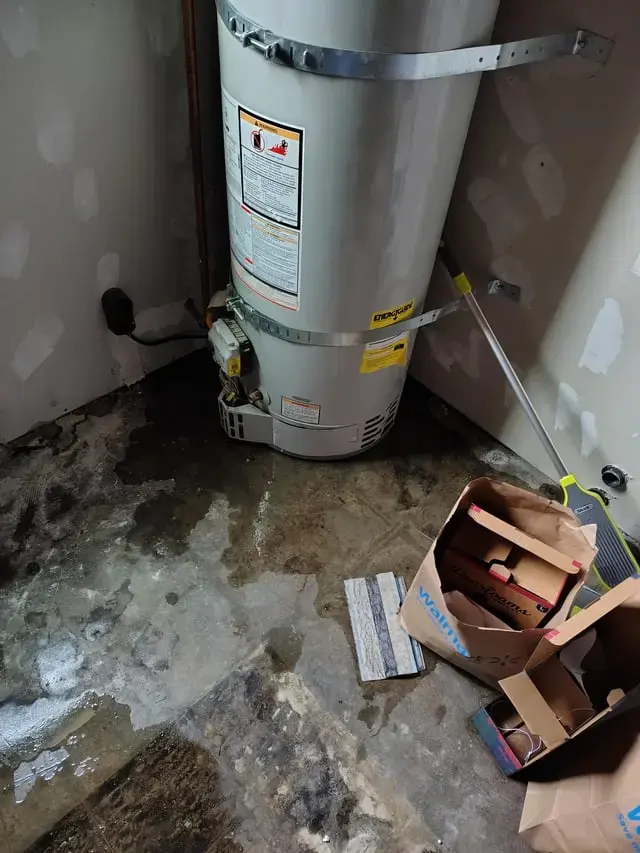
La Mirada grew fast. The city was planned as a complete community, and by 1956 builders had put up thirteen tracts with 7,800 homes. Those houses are now decades old, and so are many of the tank water heaters standing in their garages and closets.
Key takeaways
- About 49 percent of La Mirada housing units were built in the 1950s, and about 80 percent were built before 1980.
- A leaking tank cannot be patched, so the leak is stopped at the shutoff and the tank is replaced by a plumber.
- The order is cold water inlet, then gas or power to the heater, then extraction before the water reaches walls and flooring.
- A closet tank sends water into wall framing, while a garage tank spreads across the floor and toward the house.
- Document the leak, the tank label and the wet areas before any material is removed.
Why La Mirada tract homes see tank failures
In 1954 builder Louis M. Halper bought 2,100 acres for a planned community, and La Mirada grew from about 100 homes to over 8,000 by 1960. The median home in the city was built in 1960.
That history matters because water heaters are replaced on a cycle, and the housing stock has been through it more than once. Some tanks are original, some are second or third replacements, and all of them age.
- About 7,709 La Mirada units were built in the 1950s.
- About 12,502 units, or about 80 percent, were built before 1980.
- About 78 percent of units are detached single family homes, so many tanks sit in a garage or a hall closet.
Signs that a tank is close to failing
Tanks usually give warnings before they let go. The steel inside is protected by a lining that slowly breaks down, and then water finds a way through.
- Rust stains or a damp ring at the base of the tank.
- A relief valve that drips or weeps.
- Rusty or cloudy hot water at the tap.
- Rumbling or popping noises while the tank heats.
- Moisture or a soft spot on the closet or garage floor around the heater.
What to shut off first
When water is coming from the tank, the goal is to stop the supply and protect the house. The steps are short and easy to remember.
Water, gas and power
Close the cold water inlet valve on top of the tank. Then turn the gas control to off or switch off power to an electric heater at the breaker.
Draining the tank is a plumber's job, but opening a hot tap in the house relieves pressure while the valve is closed.
Protect the floor and the wall
Water that pools in a closet runs under the wall into the next room, and in a garage it moves toward the house wall and the door threshold.
- Move boxes, tools and stored items out of the wet area.
- Use towels or a wet vacuum only for small amounts of water.
- Keep the household away from the area if the heater is gas fired and a smell is present.
What a leak does to a garage and the rooms beside it
Many tract homes in La Mirada have a garage attached to the house, and the tank often sits there. Water from a failed tank crosses the concrete floor and then looks for a way into the house.
The wall between the garage and the living space is the place to watch.
- Door thresholds that connect the garage to the house.
- Drywall at the base of the shared wall.
- Cabinets, shelves and stored boxes along the wall.
- Floor drains, which may carry some of the water away but not all of it.
Closet versus garage: where the water goes
Where the tank sits changes what has to be dried. The water heater leak cleanup page for La Mirada covers both cases.
- A closet tank soaks the base of the wall, the carpet next to it and sometimes the room beyond.
- A garage tank wets the concrete floor, stored items and the bottom of the garage wall.
- Either one can wick moisture up drywall and into the framing.
Extraction and drying
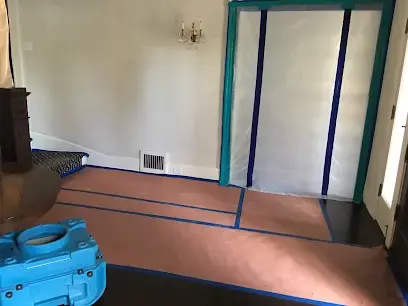
Extraction is the first real step. The team pulls standing water, lifts wet carpet and pad and inspects the base of the wall with a moisture meter.
The water extraction service in La Mirada describes the equipment, and drying follows once the standing water is gone.
Opening the wall only where readings say
A thin strip of drywall is often cut at the base of the wall so the cavity can dry. The cut stops where the moisture readings stop.
Equipment and readings
Air movers and dehumidifiers run until the framing, the subfloor and the slab reach a dry standard. Readings are taken at each visit, so nothing is sealed up while it is still wet.
Questions to ask before a new tank goes in
A leak is a good moment to rethink the setup around the heater, because the floor is already open and dry.
A plumber can answer most of these questions on the same visit.
- Is there a drain pan under the tank, and does it drain to a safe place?
- Is the shutoff valve in good shape and easy to reach?
- Does the relief valve discharge pipe run to a safe spot?
- Could the tank be placed where a failure would do less damage?
- Which permit and inspection rules apply, since the plumber and the city handle that part?
Rented and shared homes
About 24 percent of occupied La Mirada homes are rented, and about 14 percent of units are in buildings of five or more units. A tank in a shared building can leak onto a unit below.
Tenants should tell the property manager at once and keep the messages in writing.
Replacement, repairs and the claim
A leaking tank is replaced, not repaired. The plumber chooses the new unit and handles the installation, and any permit questions go to the plumber and the city.
Whether a loss is covered depends on the policy, so ask the insurer early. A file with the photos, the tank label, the plumber's invoice and the drying log makes the claim simpler, and the general water heater leak cleanup page lists what to collect.
Questions
Can a leaking water heater be repaired?
A leak from the tank itself cannot be patched in a lasting way, so the tank is replaced. A leak from a fitting or a relief valve may be a simpler fix, and a plumber decides.
What if the heater is in a closet next to carpet?
Carpet and pad near the closet soak up water quickly. They are usually lifted so the floor and wall base can be extracted and dried.
Is the water from a tank clean?
Water from a supply tank starts clean, but it picks up contaminants as it sits in carpet and wall material. Quick extraction keeps it from becoming a bigger job.
Do I need to drain the tank myself?
No. Close the cold water inlet and turn off the fuel or power, then leave draining to the plumber.
How do I know the wall is wet inside?
A moisture meter reads behind the surface. Staining, soft baseboards and peeling paint are visible clues.
Should I move stored items right away?
Yes, if it is safe to do so. Cardboard, fabric and paper soak up water quickly, so they should be lifted off the floor and photographed.