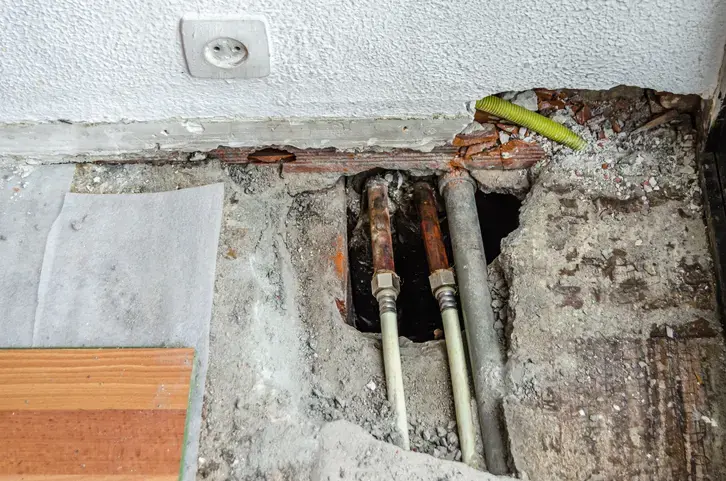
Much of La Habra was built in the 1950s through the 1970s as single story ranch homes on concrete slabs, with copper supply pipe running under the floor. When one of those pipes wears through, the water has nowhere to go but up, sideways and into the bottom of the walls.
Key takeaways
- A slab leak is a supply pipe leaking under the concrete floor, so the first signs show up in flooring, baseboards and the water meter rather than in a ceiling.
- A warm patch on the floor, the sound of running water with every tap closed, or a meter that keeps moving are the classic signals.
- Shut off the main water valve, photograph everything and keep the wet area clear until the leak is traced.
- The restoration team removes wet flooring, extracts standing water, then dries the slab and the lower walls with readings taken until the structure is back to a dry standard.
- Whether the plumbing repair or the water damage is covered depends on the policy, so ask the insurer before work is scheduled.
Why slab leaks are a La Habra problem
A large share of La Habra housing is made up of slab on grade ranch homes from the 1950s to the 1970s. In many of them the copper supply pipe was laid beneath the concrete when the house was built.
That pipe has now been carrying water for half a century or more. Copper can wear thin from the inside, and a pinhole under a slab can leak for weeks before anyone notices.
The restoration team works these losses across ZIP codes 90631, 90632 and 90633 in the La Habra service area.
- The pipe is buried, so there is no cabinet or crawl space where a drip can be seen.
- Water follows the slab, then rises at cracks, door thresholds and the base of walls.
- Carpet, laminate and wood flooring act like a sponge and spread the damage across a room.
Warning signs inside the house
Most slab leaks announce themselves slowly. A homeowner usually notices one small thing, then a second, and only then starts to connect them.
Signs on the floor and walls
A hot water pipe under the slab can leave a warm spot on a tile or concrete floor. A cold water leak is quieter and tends to show up as dampness.
- Carpet that feels damp or smells musty in one area while the rest of the room is dry.
- Laminate or hardwood that cups, lifts or opens at the seams.
- Baseboards that swell, stain or pull away from the wall.
- Hairline cracks in grout or tile that were not there before.
Signs from the plumbing
The meter is the most honest witness. Close every faucet, turn off the ice maker and washer, then watch the leak indicator on the water meter.
If it keeps turning with everything off, water is escaping somewhere between the meter and the fixtures.
- A water bill that jumps without any change in how the household uses water.
- A faint hiss or the sound of running water when the house is quiet.
- Low water pressure at several fixtures at once.
What to do in the first hours
The goal is to stop the water, protect the evidence and keep the damage from spreading while the leak is traced.
Details matter here because a slab leak is often a mix of a plumbing repair and a water damage claim.
- Shut off the main water valve at the house and open one faucet to relieve pressure.
- Photograph the wet flooring, the meter reading and any stained baseboards before anything is moved.
- Lift small rugs and move furniture legs onto foil or plastic so wood and fabric do not wick moisture.
- Keep the household out of the wet area if the floor is soft, and never run a household fan across wet carpet.
- Call a plumber for leak detection, then call the restoration team so drying can start in parallel.
How the restoration team handles a slab leak
The work follows the water. The team maps the wet area with a moisture meter and a thermal camera, then removes the materials that cannot be saved.
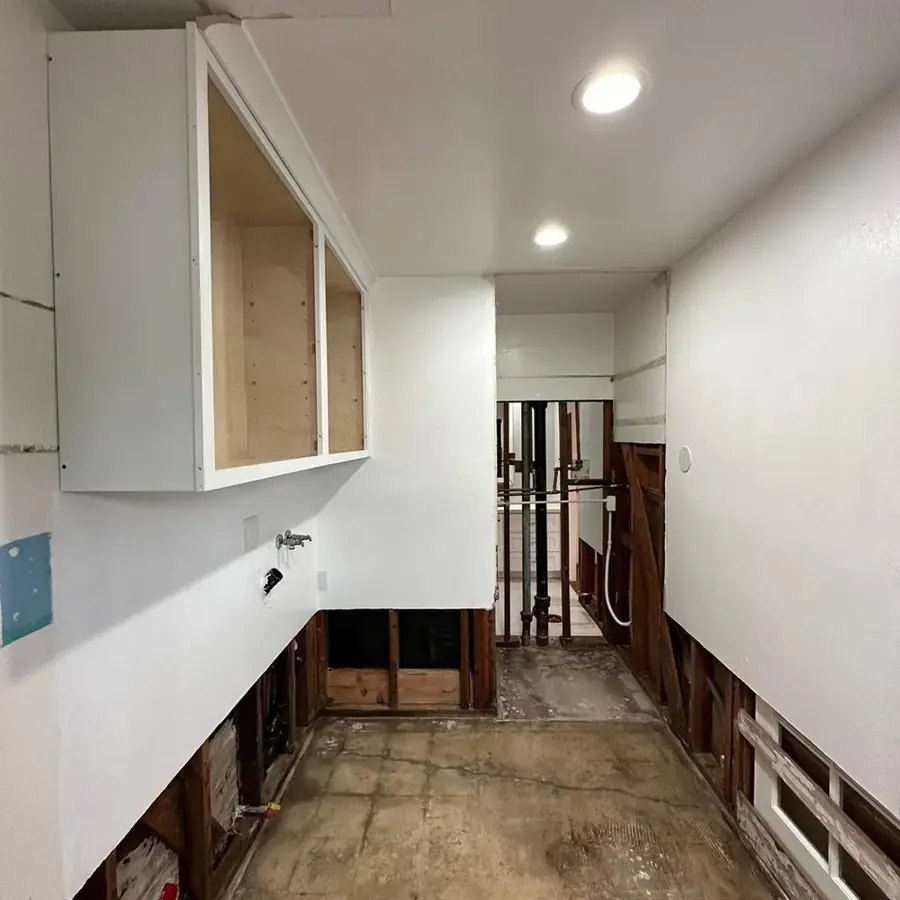
Wet carpet and pad usually come out first, and swollen baseboards and lower drywall are cut back only as far as the readings say. The service page on slab leak water damage in La Habra describes that sequence in more detail.
Extraction and removal
Standing water is pulled out first. Then flooring that is holding moisture is lifted so the slab can breathe and air can reach it.
Drying the slab and the lower walls
Concrete holds water longer than most people expect. Air movers push dry air across the surface while dehumidifiers pull the moisture out of the room.
Readings are taken again each visit. Drying is complete when the framing and slab are within 2 to 4 points of a dry reference material, which is the standard behind structural drying in La Habra.
Plumbing repair versus water damage repair
Finding and fixing the leaking pipe is a plumber's job, and it often means opening the slab or rerouting the supply pipe through the attic or walls.
The restoration team works on the wet structure around that repair. Coordinating the two keeps the same section of floor from being opened twice.
- Ask the plumber to document the location of the leak with photos.
- Share the plumber's report with the restoration team so drying is aimed at the right rooms.
- Keep copies of every invoice, because both bills usually go into the claim file.
Insurance and paperwork
Coverage for slab leaks varies. Some policies pay for the water damage that results from a sudden leak but not for the pipe itself, and others treat a long running leak differently.
Whether a loss is covered depends on the policy, so check with the insurer early. A clear record of the first signs, the meter reading and the drying readings makes that conversation simpler.
- Date of the first sign, such as a warm floor or damp carpet.
- Photos before and after demolition, with the room named in each file.
- Moisture readings from each drying visit.
- The plumber's leak detection report and repair invoice.
Questions
How do I know a leak is under the slab and not in a wall?
A meter that keeps moving with every fixture off proves a leak exists, and a damp or warm floor spot points to the slab. Leak detection by a plumber confirms the exact location.
Can I keep using the water while I wait?
Most households shut off the main valve at the house and use it only when needed. A running leak under the slab keeps soaking the floor, so the valve should stay closed between uses.
Does the whole floor have to come up?
Only the areas that readings show are wet and cannot be dried in place. Flooring in dry rooms can usually stay.
Will the walls need to be cut open?
Sometimes a strip of drywall near the floor is cut back so the bottom of the wall can dry. The cut goes only as high as the moisture readings call for.
Who should be called first, the plumber or the restoration team?
Shut off the water first, then call both. Drying can start while the plumber traces the leak, which limits how far the water spreads.