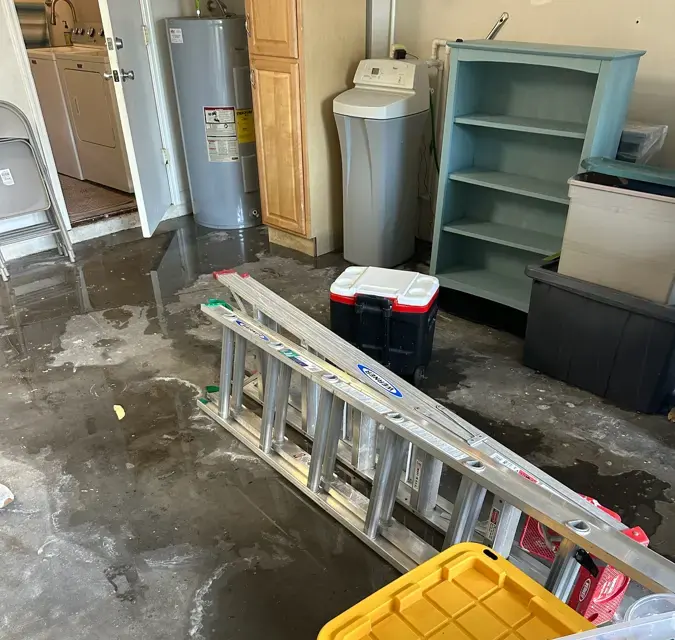
La Habra sits below the Puente Hills and La Habra Heights, and winter storms from November to March send runoff south through the city toward the Coyote Creek channel. Most of the time the channels carry it away. When they do not, the water arrives at back fences, garages and door thresholds.
Key takeaways
- Runoff from the Puente Hills and La Habra Heights drains south through La Habra toward the Coyote Creek channel during winter storms.
- A January 2019 storm collapse opened a sinkhole in the La Habra storm channel behind homes, which shows how fast a channel can change.
- Storm water that enters a house is treated as contaminated, so wet porous materials are usually removed instead of dried.
- Photograph the high water mark, shut off power to wet areas if it is safe and keep the household off flooded floors.
- Fast extraction is what protects the slab, the framing and the lower walls.
How the water gets to La Habra homes
Winter storms from November to March are the season for runoff. Rain that lands on the Puente Hills and La Habra Heights runs downhill, through streets and storm drains and toward the Coyote Creek channel.
That path crosses neighborhoods built mostly in the 1950s through the 1970s, including the later tracts on the Westridge hillside and the apartment and condo blocks along the boulevards.
- Runoff reaches low driveways, side yards and garage doors first.
- Single story ranch homes on slabs sit close to ground level, so even shallow water can cross a threshold.
- Water that gets in follows the slab and soaks the bottom of the walls.
What the January 2019 sinkhole showed
In January 2019 a storm collapse opened a sinkhole in the La Habra storm channel behind homes. It was a reminder that the channel behind a back fence is infrastructure under stress during a big storm.
A homeowner cannot control that channel, but a homeowner can control what happens inside the property line.
Westridge hillside tracts and boulevard blocks
La Habra is not one kind of neighborhood. The Westridge hillside has later tracts, while the older flats are mostly 1950s to 1970s ranch homes, and apartment and condo blocks line the boulevards.
Each one meets storm water in its own way, and a quick look at the property after a storm tells a lot.
- Hillside lots may see fast runoff along driveways and side yards.
- Flat ranch lots can collect water in low corners and at garage doors.
- Boulevard apartment and condo blocks may see water in parking areas and ground floor units.
Why storm water is a contaminated water job
Runoff picks up soil, oil, trash and the contents of anything it passes. That is why storm water entering a house is classed as Category 3, the most contaminated water category.
The storm and flood cleanup service in La Habra is planned around that fact, and it changes what gets saved.
- Carpet, pad and wet insulation are usually removed.
- Wet drywall and baseboards are cut back to where the readings are dry.
- Hard floors, concrete and framing are cleaned, treated and dried in place.
- Nothing wet is carried through dry rooms.
Common mistakes during and after a storm
Storm nights are stressful, and a few common moves make the loss bigger. Knowing them ahead of time helps a household stay calm.
- Walking through flooded rooms with the power still on.
- Using a household vacuum on standing water or wet mud.
- Leaving wet carpet and pad in place for days because the surface looks fine.
- Closing up wet walls or reinstalling baseboards before readings confirm they are dry.
- Skipping photos because the cleanup feels urgent.
What to do when water reaches the house
The first steps are about people and power. Everything else can wait until the area is safe.
Safety first
If water is near outlets, appliances or the panel, turn off power to that part of the house only when the breaker can be reached without standing in water.
- Keep children and pets out of the flooded area.
- Wear boots and gloves to limit skin contact.
- Avoid walking through standing water that may be hiding debris.
Document and move what can be moved
Photograph the high water mark on the walls and the depth in each room before cleanup starts. Then lift valuables, electronics and papers onto higher shelves.
Extraction and drying after runoff
Extraction comes first. Truck mounted equipment and portable pumps remove standing water, and mud and debris are cleared before drying begins.
The water extraction service in La Habra covers that stage.
Drying then focuses on the slab, the bottom of the walls and any framing the water touched.
Readings decide when it is done
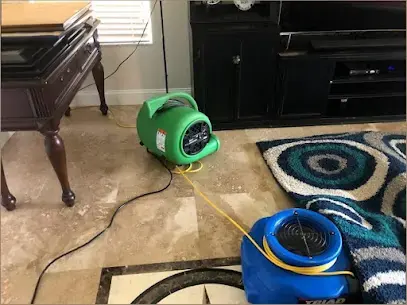
Air movers and dehumidifiers run while the team takes readings at every visit. Equipment stays until the structure reaches a dry standard, not until it looks dry.
The order of cleanup after a storm loss
A storm loss follows a fixed order. Doing the steps out of order is how wet materials end up back in the house.
The sequence below is the one the restoration team follows on most storm water losses.
- Safety check for power, gas smell and structural problems.
- Removal of mud and debris and extraction of standing water.
- Removal of porous materials that cannot be cleaned.
- Cleaning and antimicrobial treatment of the surfaces that stay.
- Drying with air movers and dehumidifiers, with readings until the dry goal is met.
Getting ready before the next storm
A few steps taken in the fall lower the risk and make a bad night easier. They cost little compared with a flooded floor.
- Clear gutters, downspouts and any drains around the yard.
- Point downspouts away from the slab.
- Check where water has pooled in past storms and mark those spots.
- Keep important papers and valuables off floors and low shelves.
- Save the restoration team's contact so there is no searching during a storm.
Insurance and paperwork
Coverage for storm and surface water varies, and many standard homeowner policies treat it differently than a pipe failure. Whether a loss is covered depends on the policy, so ask the insurer before work is scheduled.
A clear file helps: dated photos, a list of damaged items and the drying readings. The restoration team serves the La Habra service area and documents each visit for that file.
Questions
Where does hillside runoff go in La Habra?
Runoff from the Puente Hills and La Habra Heights drains south through the city toward the Coyote Creek channel during winter storms.
What happened in the storm channel in January 2019?
A storm collapse opened a sinkhole in the La Habra storm channel behind homes.
Is storm water in the house safe to clean myself?
It is classed as contaminated, so protective gear is needed and large losses are better left to the restoration team.
Can the carpet be saved after a storm flood?
Carpet and pad that soaked up contaminated storm water are normally removed. Hard floors can often be cleaned and dried.
When is the storm season in La Habra?
Winter storms run from November to March, with dry summers in between.
Do hillside homes flood differently from flat ones?
Runoff reaches hillside lots fast along driveways and side yards, while flat lots collect water in low corners. Either one can bring water in at a garage door or threshold.