When a toilet gurgles and a floor drain starts to fill, the first question is usually who is responsible for the pipe. In Fullerton the answer splits in two: the City maintains the sewer main, and the homeowner is responsible for the lateral that connects the house to it.
Key takeaways
- The City of Fullerton says the homeowner is responsible for the sewer lateral, the pipe from the home to the city sewer main.
- The City Sewer Division maintains the main, so a backup in the main and a backup in the lateral are different problems.
- Sewage that comes back into a house is Category 3 water and is treated as contaminated, not as a simple spill.
- Stop using sinks, tubs, showers and toilets, keep children and pets out, and photograph the affected rooms before cleanup.
- Porous materials such as carpet, pad and wet drywall that touched sewage usually have to be removed.
The main, the wye and the lateral
The City of Fullerton Sewer Division maintains the sewer pipe under the streets. Each house connects to that main through a lateral that runs from the home to a connection point called the wye.
The City states that the homeowner is responsible for the lateral. City code section 12.08.031 also puts the cost of installing lateral sewers on the property owner or developer.
- The main belongs to the City and serves many properties at once.
- The lateral belongs to the homeowner and serves one property.
- The wye is where the two meet, and it marks the practical handoff point.
Why a lateral backs up in older Fullerton neighborhoods
Fullerton has about 52,304 housing units, and about 71 percent were built before 1980. The 1960s, 1950s and 1970s are the biggest build eras, with 1,541 units dating to 1939 or earlier.
Older pipes and mature trees are a common pairing, which is why the City runs a Sewer Lateral Maintenance Program that helps residents with root blockages caused by City maintained trees.
Common causes
A lateral can clog for ordinary reasons that have nothing to do with the main.
- Tree roots working into a joint or crack.
- Grease and wipes building up at a bend.
- A belly or break in an aging pipe that holds water and debris.
How to tell a lateral problem from a main problem
If only one house is affected, the lateral is the usual suspect. If neighbors on the same street report slow drains too, the main may be involved and the City should be told.
What to do when sewage comes up
Sewage is a health matter first and a property matter second. The safest moves are the simple ones.
- Stop using every sink, tub, shower, dishwasher and washer so no more water is sent into the pipe.
- Keep children and pets out of the wet rooms and wear waterproof boots and gloves if the area must be entered.
- Do not use a household vacuum or fans on the affected area, since they spread contaminated water and droplets.
- Photograph the rooms, the floor drain and any stained walls before anything is moved.
- Call a plumber to clear the pipe and find the cause, then the restoration team for the cleanup.
Rooms that need attention first
Backups surface at the lowest fixture in the house, which is often a floor drain, a shower or a tub. The water then spreads outward along the floor.
The first rooms to check are the ones around those fixtures.
- Bathrooms and laundry rooms where the lowest drains sit.
- Hallways and bedrooms where carpet touches the bathroom wall.
- Garages with a floor drain or a sink connected to the same lateral.
What Category 3 water means
Water is sorted into categories by how contaminated it is. Sewage backing up from a drain is Category 3, the most serious, because it can carry bacteria and other contaminants.
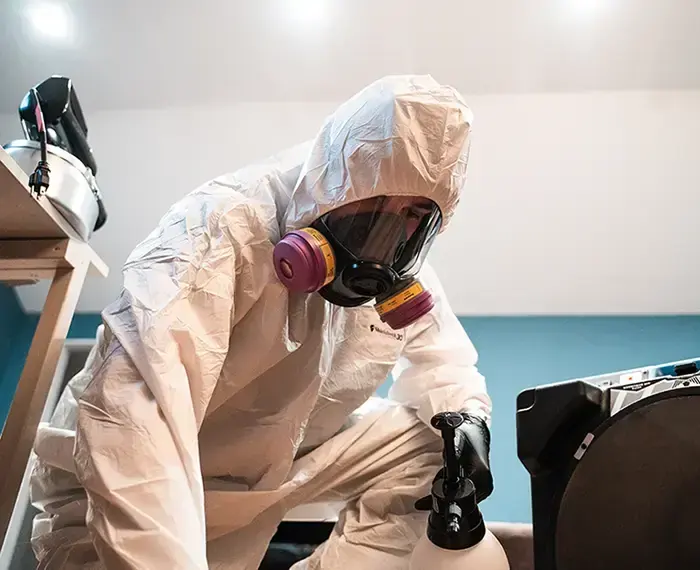
That category changes the job. The work is not just drying, it is containing the area, removing what cannot be cleaned and sanitizing what stays.
- Carpet, pad, insulation and wet drywall that touched sewage are removed instead of dried.
- Hard surfaces such as tile, concrete and sealed wood are cleaned and treated with an antimicrobial.
- The area is contained with plastic so the spread is limited to one room instead of the whole house.
How the cleanup runs
The process on the sewage backup cleanup page for Fullerton follows a steady order so nothing is missed.
Containment and removal
The crew seals off the room, extracts the contaminated water and removes the materials that cannot be cleaned. Baseboards are pulled so the wall base can be reached.
Waste is bagged and removed from the house instead of being carried through clean rooms.
Cleaning, treating and drying
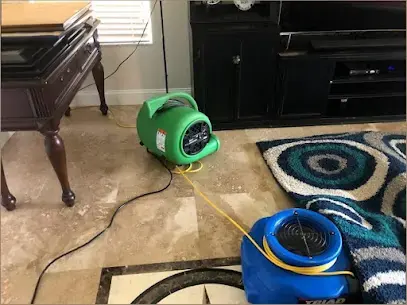
Surfaces are cleaned, treated and then dried with air movers and dehumidifiers. Moisture readings confirm that framing and subfloor are back to a dry standard before anything is rebuilt.
Lowering the odds of a repeat
A backup that is cleaned but never explained tends to come back. The plumber's findings decide what comes next.
Many plumbers run a camera through the lateral after clearing it, which shows roots, breaks and low spots that hold water.
- Keep grease, wipes and paper towels out of drains and toilets.
- Ask for a camera inspection if the lateral has backed up before.
- Cut back or replace plantings above the lateral if roots are the cause, and ask the City about the Sewer Lateral Maintenance Program when a City tree is involved.
- Keep the plumber's report with the claim file.
A bathroom overflow is not always a sewer backup
A toilet that overflows from a clog in the fixture is different from a backup that comes up from the main drain. A simple overflow can still be contaminated, so it is treated with care.
The page on toilet overflow cleanup in Fullerton explains how the category is decided by the source and how long the water sat.
- A clean sink overflow may be Category 1 and can often be dried.
- A toilet overflow with waste in the water is treated as Category 3.
- Water that sat for a day or more is treated as more contaminated than fresh water.
Claim and paperwork basics
Insurance for sewage backups is often handled as an endorsement, and coverage depends on the policy. Ask the insurer what a backup endorsement covers before the work order is signed.
A claim file with dated photos, the plumber's invoice and the drying readings is easier to follow. The restoration team on the Fullerton water damage page documents the work for that file.
Questions
Does the City of Fullerton fix a backup in my lateral?
The City states that the homeowner is responsible for the lateral from the house to the city sewer main, so the repair is generally the owner's. The City does help residents with root blockages caused by City maintained trees through its Sewer Lateral Maintenance Program.
Is every sewage backup Category 3?
Sewage from a drain or toilet is treated as Category 3, because it can carry bacteria. A leak from a clean supply pipe is a different category.
Can the carpet be saved after a sewage backup?
Carpet and pad that touched sewage are normally removed. Hard floors can often be cleaned and treated.
How do I know if the main in the street is blocked?
If neighbors on the same street see slow drains or backups at the same time, the main may be involved. Report that to the City Sewer Division.
Do I need a plumber before the cleanup?
Yes. Clearing the pipe stops more sewage from coming up, which makes the cleanup final instead of repeating.