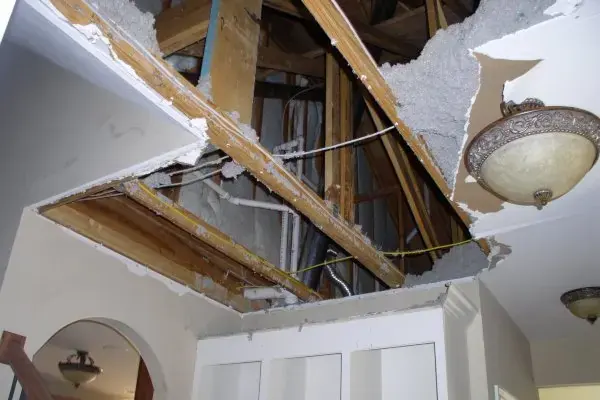
In Fullerton about 31 percent of housing units are in buildings of five or more units, and 8,104 are in buildings of 50 or more. In that kind of building, a wet ceiling often means a leak in the unit above, a problem the person underneath did not cause and cannot reach.
Key takeaways
- About 47 percent of occupied Fullerton homes are renter occupied, so many ceiling leaks involve a landlord, a tenant above and a tenant below.
- Tell the property manager right away and ask them to contact the unit above so the source is shut off.
- Photograph the stain, the drip and the damaged belongings before anything is moved.
- A ceiling that bulges with water may need to be relieved, but only if it is safe and away from light fixtures.
- Wet insulation and drywall above a ceiling hide moisture, so readings matter more than the size of the stain.
Why ceiling leaks are common in multi unit buildings
Fullerton has about 52,304 housing units. Roughly 31 percent are in buildings of five or more units, and many of those buildings stack kitchens and bathrooms directly over one another.
Pipes, drains and appliances sit above ceilings in the same shared space. When one fails, the water takes the shortest path down.
- A shower pan, tub overflow or toilet seal in the unit above.
- A supply pipe or drain inside a shared wall.
- A dishwasher, washer or ice maker that leaks onto the floor above.
- A water heater in an upper unit or a closet.
What to do when the ceiling starts to drip
The first action is not to repair anything. It is to get the source shut off and to keep a clear record.
Notify the right people
Call the property manager or landlord and ask them to contact the unit above. If no one answers, the building's emergency number or the shutoff for that unit may be the next step.
Protect belongings and people
Move furniture, electronics and bedding out from under the drip. Place buckets and plastic sheeting to catch water.
- Turn off power to the room if water is near a light fixture or outlet.
- Stay out from under a ceiling that is sagging.
- Cover items that cannot be moved with plastic.
Finding the source when no one answers upstairs
A leak does not always have a person at the other end. The unit above may be empty at work, away or even vacant.
The property manager has options, and a tenant below should know what to ask for.
- A call to the building emergency number or the on call maintenance contact.
- A request to shut off the water to the unit above at its own valve or at the building riser.
- A written note of the time the request was made, kept with the photos.
The bulging ceiling question
A ceiling that is holding water can bulge. If it collapses, the water and the drywall come down together.
Some households relieve the bulge with a small hole at its lowest point and a bucket underneath. Do it only when the area is clear of light fixtures, and only if the ceiling is not a safety hazard.
Mistakes that make a ceiling leak worse
Most of the damage in a downstairs unit is made worse by well meant moves. A few habits help avoid that.
- Waiting a day to tell the property manager, while the source keeps running upstairs.
- Painting over a stain before anyone has checked what is behind it.
- Running a household vacuum or fan under a wet, sagging ceiling.
- Throwing away damaged items before they have been photographed.
- Leaving wet insulation in place, since damp materials left alone can lead to mold.
How the restoration team dries a ceiling
The ceiling leak water damage service in Fullerton starts with mapping, since a ceiling stain is only the part that can be seen.
A moisture meter and thermal camera show how far the water traveled, including into walls and the unit next door.
- Wet insulation and saturated drywall are removed so they stop holding water.
- Dry drywall around the edge is checked and kept if readings are normal.
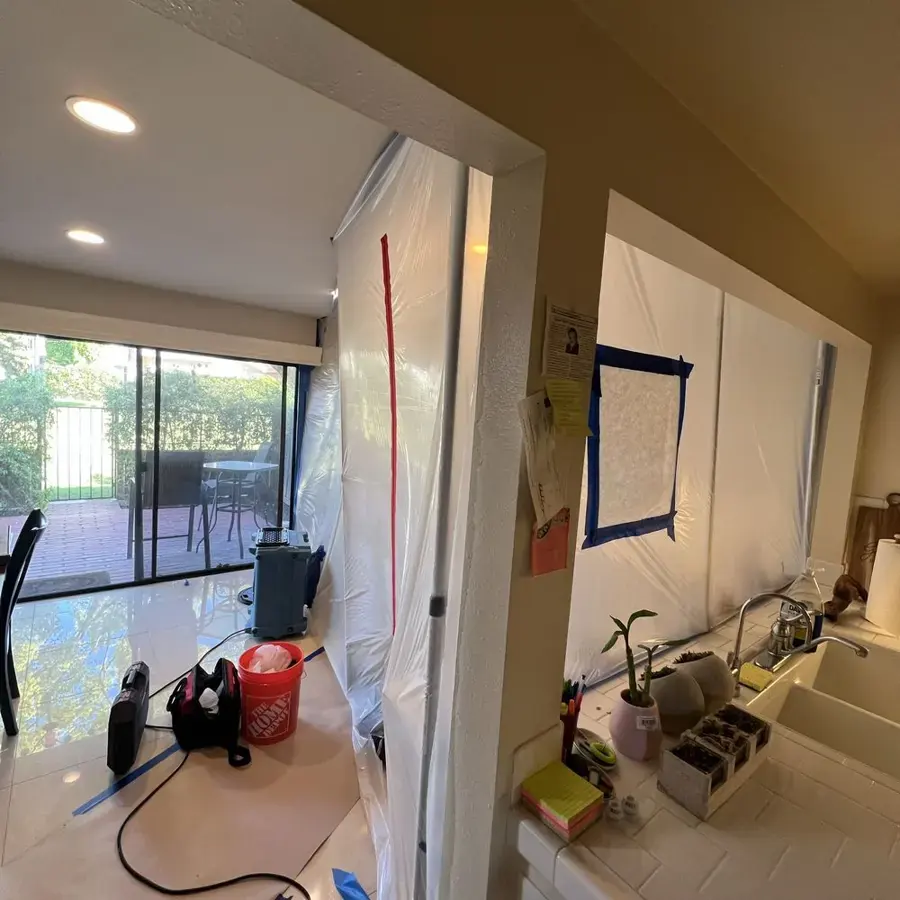
- Air movers and dehumidifiers are set, sometimes with wall cavities opened for airflow.
- Readings are taken at each visit until the ceiling and walls reach a dry standard.
What a shared building claim file looks like
Several parties can be involved in a ceiling leak: the tenant below, the tenant above, the building owner and two or more insurers. A simple file keeps each of them working from the same facts.
Start the file on the day of the leak and add to it every day. Dates count more than polish.
- A short timeline: when the leak was noticed, who was told and when the water was shut off.
- Photos of the ceiling, the walls, the floor and each damaged item.
- The property manager's response, kept as an email or text.
- The restoration team's scope of work and drying log.
When the cause is an appliance
About 47 percent of occupied Fullerton homes are rented, and many are in multi unit buildings, so a washer or dishwasher leak can reach neighbors. The appliance leak water damage page for Fullerton covers the floors and cabinets involved.
- The unit above may need its appliance shutoff valve closed.
- Cabinet bases and subfloor under the appliance can hold water.
- The damage below is often larger than what is visible above.
Responsibility, insurance and records
Who pays depends on the lease and on what caused the leak. Renters may have a policy for their belongings, and the building has its own policy for the structure.
Whether a loss is covered depends on the policy, so ask the insurer early. A clean file with dated photos, messages to the property manager and drying readings helps all sides, and the general ceiling leak water damage page lists what to keep.
The restoration team's Fullerton hub also shows the rest of the services available in the city.
- Dated photos and video of the leak and the damaged items.
- Written messages with the landlord and property manager.
- A list of damaged belongings with approximate values.
- The restoration team's moisture readings and equipment log.
Questions
Who is responsible when the leak starts in the unit above?
It depends on the lease and the cause. The property manager and the insurers sort that out, and the tenant below should document the damage.
Should I poke a hole in a bulging ceiling?
Only if it is safe and away from light fixtures. A bucket goes beneath, and the property manager should be told right away.
How big does a stain have to be to matter?
Size does not tell the story. A small stain can sit on top of wet insulation, so readings are the reliable measure.
Can the ceiling be saved?
Sometimes. Drywall that is only damp can often be dried in place, while soaked or sagging drywall is removed.
Do I call the landlord or the restoration team first?
Both, in that order. The landlord needs to stop the source, and the restoration team can begin drying once the water is off.
How long does ceiling drying take?
It depends on how wet the materials are and how much was removed. Readings are taken at each visit, and the equipment stays until the ceiling cavity and walls reach a dry standard.