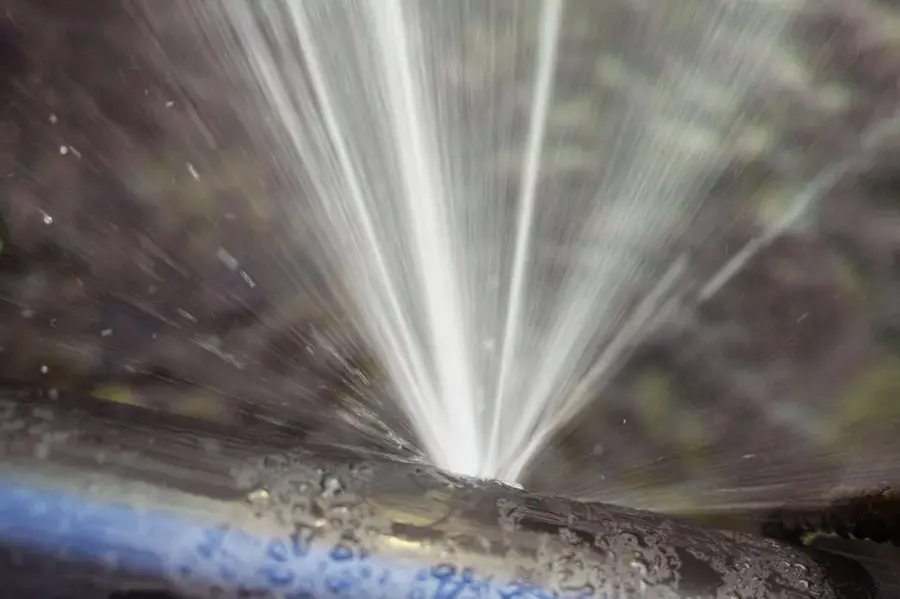
Buena Park is a city of 1950s tract homes. About 43 percent of its housing units went up in that decade, 11,106 of them, and the median home was built in 1960. Pipes that age fail in ordinary ways: a fitting gives, a joint splits or a supply pipe opens up inside a wall.
Key takeaways
- About 76 percent of Buena Park housing units were built before 1980, so many homes have plumbing that has been in service for decades.
- The first action is the main water shutoff, then the faucets to drain the pipe, then the electrical hazards.
- The City of Buena Park runs a 24 hour hotline for water pollution and emergency leaks, which is the number to use for a leak on the City side of the meter.
- A burst pipe sends clean water, so it is Category 1 at the start, but it becomes more contaminated the longer it sits.
- Photograph everything before extraction starts, and keep a record of readings for the insurer.
Why older Buena Park homes see burst pipes
The 1950s are by far the largest build era in the city, followed by the 1960s with 3,535 units and the 1970s with 3,243. Buena Park has about 25,789 housing units in all.
Pipes, fittings and shutoff valves wear with age. A burst is rarely a surprise to the plumbing, only to the household.
- A fitting that corrodes at the connection and starts to spray.
- A supply pipe that splits along its length behind a wall.
- A flexible connector under a sink or toilet that fails.
- A shutoff valve that cracks when it is turned.
The shutoff sequence
Speed matters most at the start, and the order is simple. Every second water runs, more of it reaches the subfloor, the walls and the room next door.
Step one: stop the water
Find the main shutoff at the house, which is usually near where the supply enters. Turn it fully closed, then open a faucet at the lowest point to drain what is left in the pipe.
- If the burst is at a single fixture, the local shutoff valve may be enough.
- If the valve will not turn, the shutoff at the meter is the next choice.
- For a leak on the City side of the meter, use the City of Buena Park 24 hour hotline.
Step two: protect people and power
Water and electricity are a dangerous mix. If water is near outlets, appliances or the panel, turn off power to that part of the house only when it is safe to reach the breaker.
What to do before cleanup begins
Once the water is off, the next job is to slow the spread and document the loss. Details gathered now make the claim and the drying plan easier.
- Photograph and video the source, the pooled water and every wet surface.
- Move furniture, rugs and small items out of the wet area, and set foil under heavy furniture legs.
- Pull up any loose rugs, towels and pet bedding so they stop wicking water.
- Do not run a household vacuum on wet floors.
- Call the restoration team so extraction can start before the water reaches the framing.
How extraction and drying work
The burst pipe water damage service in Buena Park starts with finding where the water went, because it rarely stays where the pipe broke.
Then the team extracts standing water and pulls wet materials that cannot be saved. The water extraction page for Buena Park describes that first pass.
Mapping and opening only what is needed
A moisture meter and thermal camera trace water through walls and under flooring. Drywall is cut back only as far as readings show, which keeps repairs smaller.
Setting the drying equipment
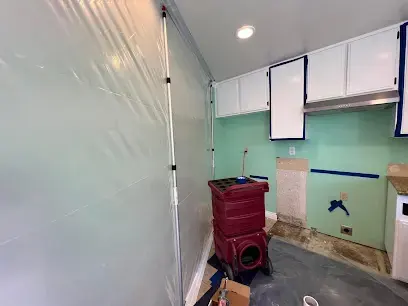
Air movers and dehumidifiers go in once wet materials are out. Readings are taken at each visit, and equipment stays until the structure reaches a dry standard.
Water category and timing
Water from a supply pipe starts clean. A burst that runs through carpet, pad and insulation can pick up contaminants as it sits, and wet drywall begins to break down.
That is why the clock matters. The sooner the extraction, the more of the structure can be saved.
- Category 1 is clean water from a supply pipe.
- Category 2 is water that has picked up contaminants, such as water that sat in a carpet for a long time.
- Category 3 is grossly contaminated water, such as sewage or storm runoff.
What the plumber does and what the restoration team does
A burst pipe usually needs two trades, and they do different jobs. Knowing the split keeps the household from waiting on the wrong call.
The plumber finds the failure, repairs or replaces the pipe, and tests the system. The restoration team removes the water and dries the building.
- Plumber: shuts off, traces the leak, repairs the pipe, and checks the other fittings that were installed at the same time.
- Restoration team: extracts the water, removes wet materials, dries the structure and records readings.
- Household: photographs, calls the insurer and keeps invoices in one folder.
Lowering the odds of the next burst
In a city where most homes are decades old, a short check now and then is cheap insurance against a flooded kitchen.
None of these steps need tools, only attention.
- Find the main shutoff and test that it turns, since a stuck valve is no help in an emergency.
- Look at the flexible connectors under sinks and toilets for bulges, rust or drips.
- Watch the water bill for unexplained jumps and check the meter when no one is using water.
- Notice changes in water pressure, which can point to a failing pipe or fitting.
Apartments, rentals and paperwork
Buena Park is a city where about 43 percent of homes are renter occupied and 2,553 units sit in three or four unit buildings. A burst pipe in one unit can reach a neighbor, so the property owner and manager should be told right away.
Whether a loss is covered depends on the policy, so ask the insurer or the landlord's insurer early. A claim file with photos, the plumber's invoice and drying readings is easy to follow, and the main burst pipe water damage page lists what to keep.
Questions
Where is the main water shutoff in a 1950s tract home?
It is usually at the point where the supply enters the house or at the meter near the street. Finding it before an emergency saves time.
Is there a city number to call for a leak?
The City of Buena Park has a 24 hour hotline for water pollution and emergency leaks. It is meant for leaks on the City side of the system.
Does a burst pipe always mean the walls get cut open?
No. The team cuts only where moisture readings show water in the wall cavity, and many walls can be dried in place.
Who pays when a pipe bursts in a rental?
That depends on the lease and the policies involved. The tenant should tell the property manager at once and keep photos.
Can I stay in the house during drying?
Often yes, but the noise of equipment is real. Rooms with wet carpet or open walls may be best avoided.